
Fixed vs Semi-Flexible vs Foldable Solar Panels: Which One’s Right for You?
Ever pulled up at camp and woken up to a warm fridge and dead lights? Once your batteries are flat, the fun stops fast, and if you’re remote, it’s more than just annoying.
That’s where a good solar setup makes all the difference. It keeps your gear running without relying on your alternator or a noisy generator. Whether you’re parked up at the beach for a week, on site with power tools, or touring the outback, solar means cold drinks, charged devices, and lights that don’t let you down.
At Outback Equipment, we’ve compared three main solar styles: fixed panels, semi-flexible panels, and foldable blankets. The comparison helps you choose the right setup for your rig.
Why Solar is Worth It
Your alternator does a great job charging your battery while you drive, but stop for a few days with your fridge, lights, and devices running, and that battery will drain quickly.
Solar gives you free, steady power while you’re parked. Six hours of good sun can top your battery back up, so you can enjoy camping without worrying about flattening your system.
Fixed Solar Panels
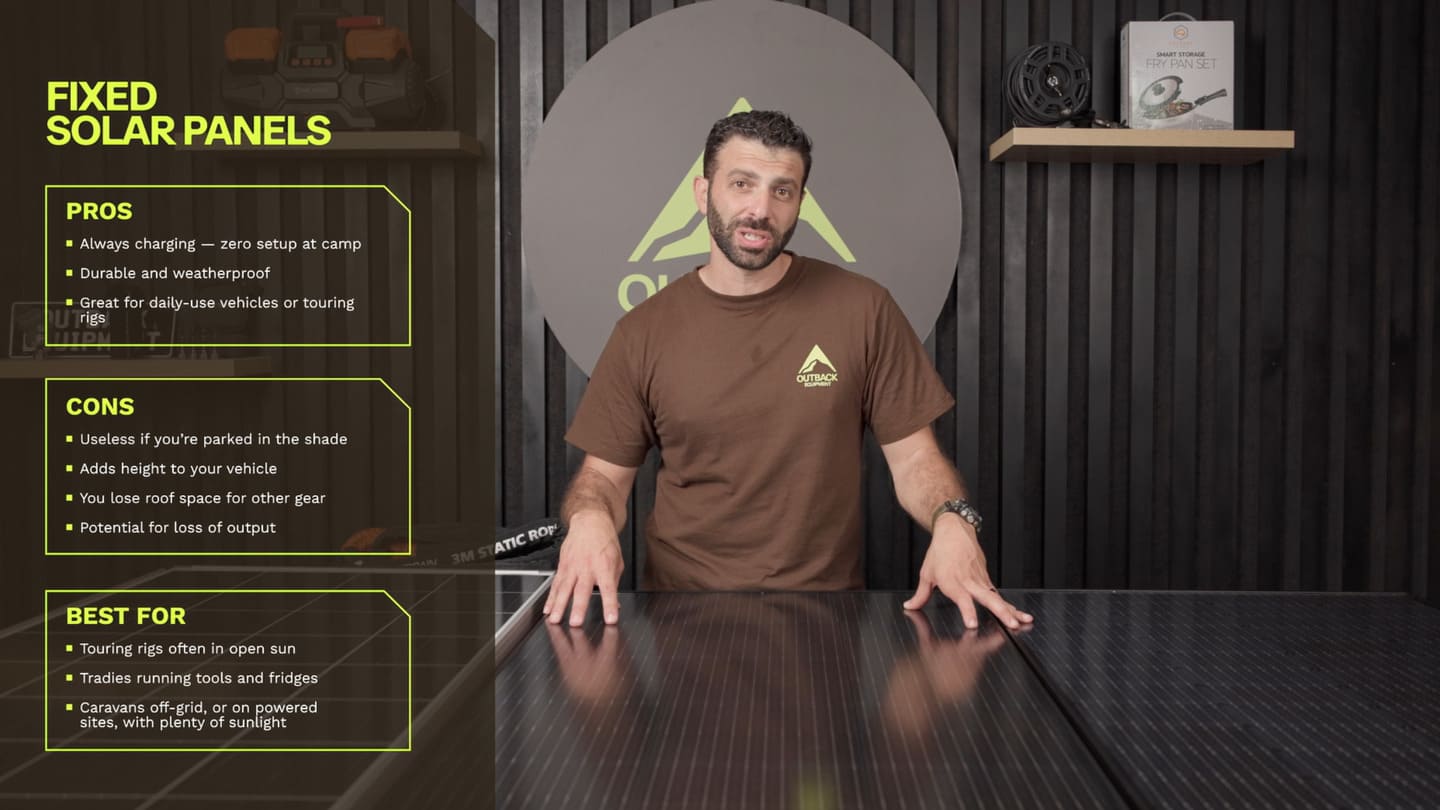
Fixed panels are bolted onto your roof or caravan, so they’re charging whenever there’s sun.
Examples we tested:
- Tuff Terrain 200W Slim Panel: only 22mm thick, lightweight, and puts out over 10 amps in good light.
- Hardkorr 170W Fixed Panel: built with A-grade monocrystalline cells under tough tempered glass. Great for hail, stones, and off-road conditions.
- Enerdrive 190W Fixed Mono Panel: highly reliable, with strong local support and warranty.
Real-world output:
A 170–200W fixed panel produces 8–11 amps in full sun, which means around 48–66 amp-hours across a six-hour sunny day. That’s enough to run a 50L fridge (about 36Ah/day) plus LED lights and phone charging.
Pros:
- Always charging, no setup needed
- Durable and weatherproof
- Perfect for daily-use vehicles and touring rigs
Cons:
- Won’t work if you’re parked in the shade
- Takes up roof space and adds height
- Flat mounting can lose up to 20% of potential output
Best for: touring rigs in open sun, tradies with tools and fridges, caravans on powered or off-grid sites.
Semi-Flexible Solar Panels
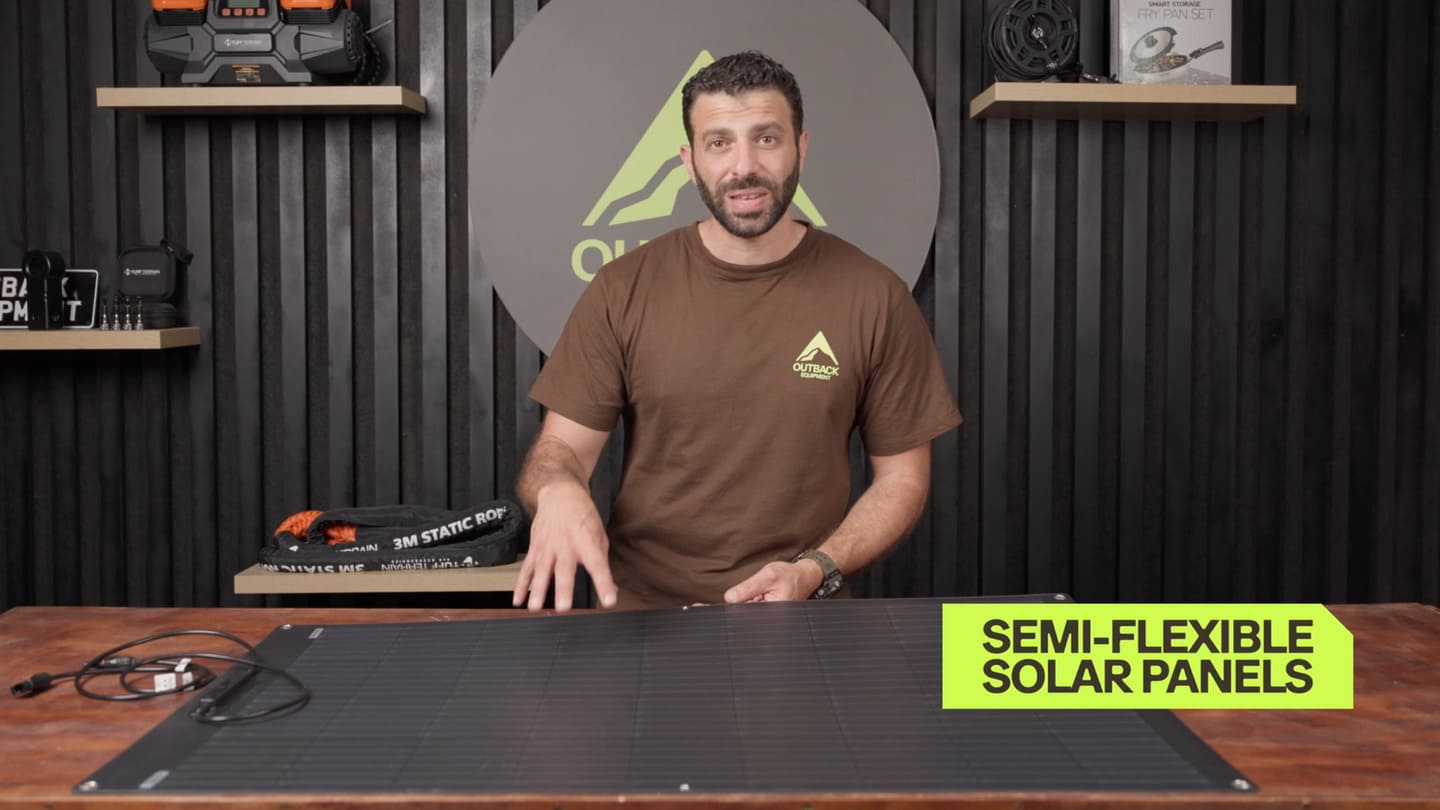
Semi-flexible panels are lightweight and can be mounted on curved or awkward surfaces, like a pop-top roof, boat canopy, or even your bonnet.
Example: Drivetech 4x4 110W Semi-Flexible Panel
What they can power: enough to run a small fridge for a day, or offset power draw from lights and devices while you’re moving.
Pros:
- Super light and low-profile
- Mounts to curved or thin roofs
- Almost invisible once installed
Cons:
- Lower wattage than rigid panels
- Can run hotter without airflow, reducing efficiency
- Less impact-resistant than tempered glass
Best for: boats, pop-top campers, stealth installs, and setups where weight and space matter most.
Foldable Solar Blankets
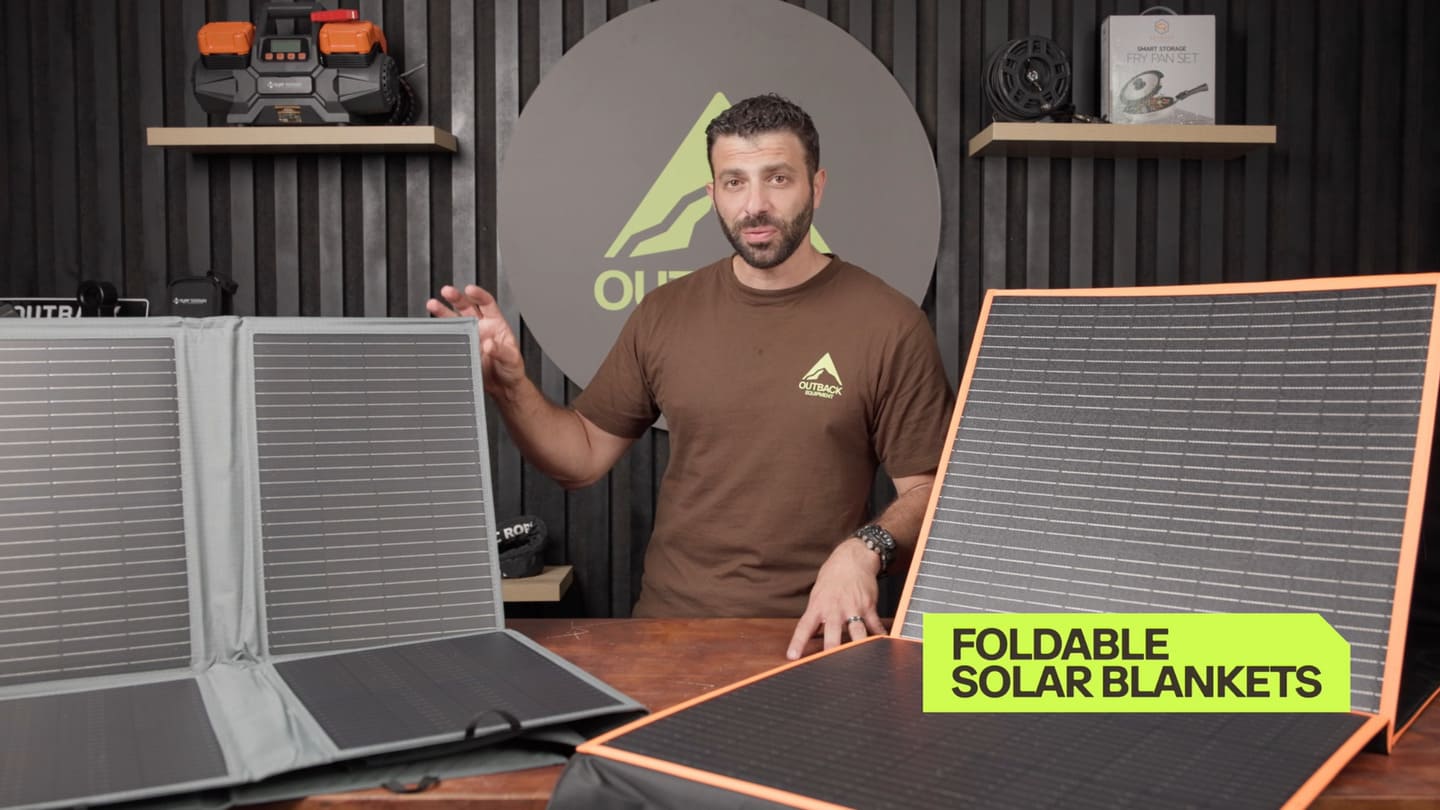 Foldable solar blankets are the most portable option. You can park in the shade, run a cable to the sun, and keep charging.
Examples we tested:
- Hardkorr 300W Blanket – high-efficiency PERC cells, folds small enough to stash behind a seat, up to 17 amps in good light.
- Wildtrak 300W Blanket – ETFE coating for toughness, built-in stands for perfect angling at the sun.
Real-world output:
A 300W blanket can produce 16–17 amps in good light, about 96–102 amp-hours per day. That’s enough for a fridge, lights, phone charging, and even extras like a coffee machine or a small inverter.
Pros:
- Portable, possible to chase the sun wherever it is
- Packs down small for easy storage
- Can be angled for maximum efficiency
Cons:
- More expensive upfront
- Setup and pack-down needed each time
- Can be damaged if not handled carefully
Best for: campsites under trees, travellers with limited roof space, or as backup power for bigger setups.
Real-World Test: Top Fixed Panels
We tested the Tuff Terrain 200W Slim, Hardkorr 170W Fixed, and Enerdrive 190W Fixed Mono under the same cloudy conditions, using the same regulator and battery.
- Tuff Terrain 200W Slim: pulled just over 12 amps
- Hardkorr 170W: pulled over 10 amps
- Enerdrive 190W Mono: peaked at 12 amps
Note: output depends on sun angle, cloud cover, and time of day. In this test, there were partially cloudy conditions with shifting sunlight.
When choosing a panel, don’t just look at wattage. Build quality matters too: rust-proof frames, hail-resistant glass, and heavy-duty cabling all make a big difference.
Tech Tips: Getting the Most From Your Solar
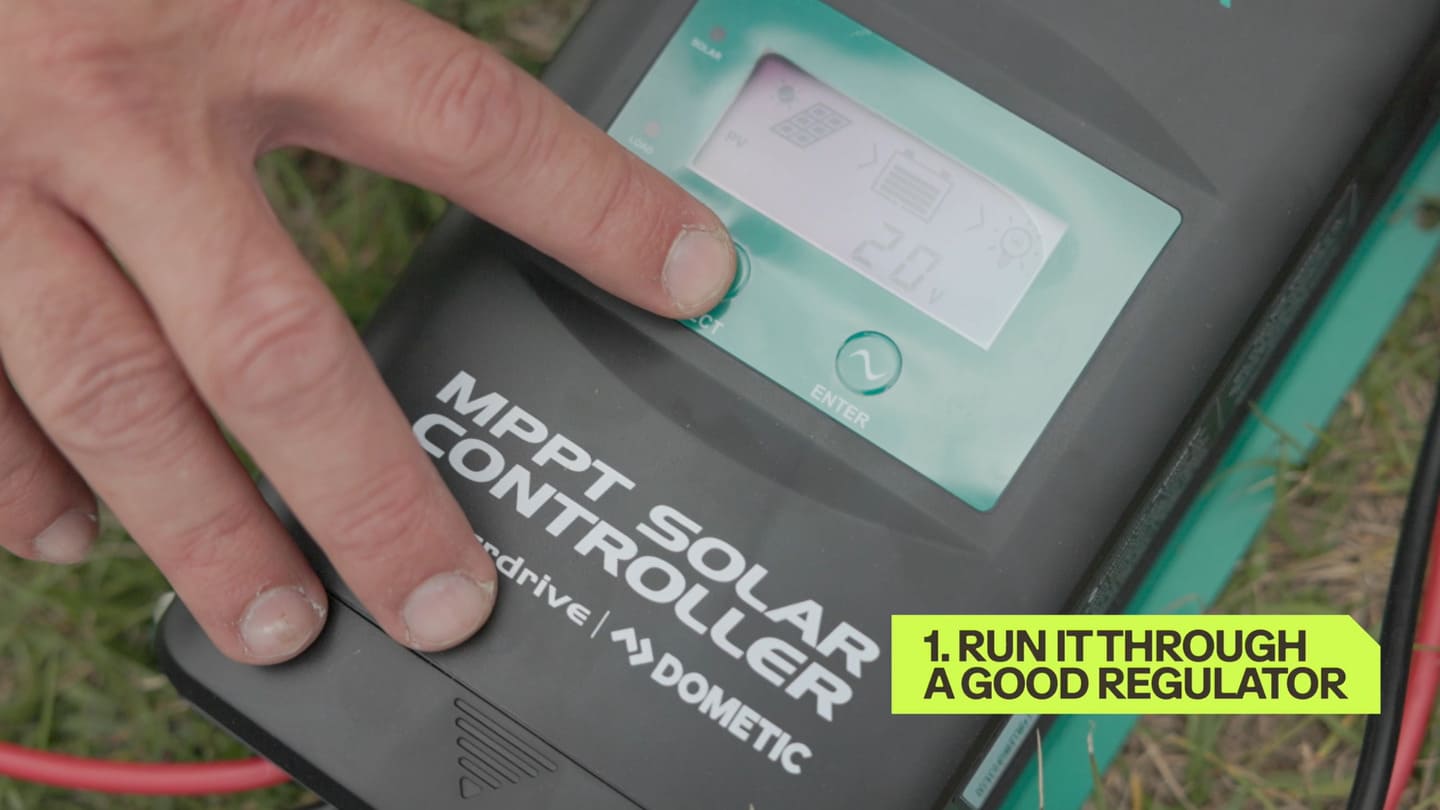
- Use an MPPT regulator for maximum efficiency in changing light.
- Match your panel’s voltage to your regulator or battery — too low won’t charge, too high can damage your gear.
- Use thicker cables to reduce voltage drop.
- Keep connectors compatible (MC4, Anderson, XT60).
- Clean your panels regularly, even a thin layer of dust can halve your output.
Mistakes to Avoid
- Letting dust and grime build up
- Parking where panels sit in shade during peak sun hours
- Using cables that are too thin
- Buying cheap panels with overstated wattage
Look for panels with at least an IP65 weather rating and a solid warranty. Premium panels can even offer 25-year performance guarantees.
Final Word
So which solar style suits you best?
- Fixed panels = set-and-forget convenience.
- Semi-flexible panels = light, low-profile installs.
- Foldable blankets = portable power you can move around.
Check out the full range of solar gear at Outback Equipment and find the right option for your next trip.

Leave a comment