Outdoor Camper Lights: A Practical Guide to 12V LED Camp Lighting for 4WDs and Caravans
Outdoor Camper Lights: A Practical Guide to 12V LED Camp Lighting for 4WDs and Caravans
You've just rolled into camp after six hours on corrugated dirt. It's dark. Your partner is trying to light the stove while you're fumbling with a headlamp jammed between your teeth. The kids are somewhere near the swag. A lantern sitting in the middle of the table helps a bit, but the cooking area is in shadow, and anything more than two metres from the table is pitch black.
This is the problem a decent outdoor camper lighting setup solves. A 12V LED camp light system costs less than a tank of fuel, takes ten minutes to mount, and turns a stressful first-night setup into something genuinely comfortable. If you're touring with a 4WD, caravan, or camper trailer, this guide covers what to buy, what specs actually matter, and which products are worth the money.
Why Your Campsite Lighting Setup Matters
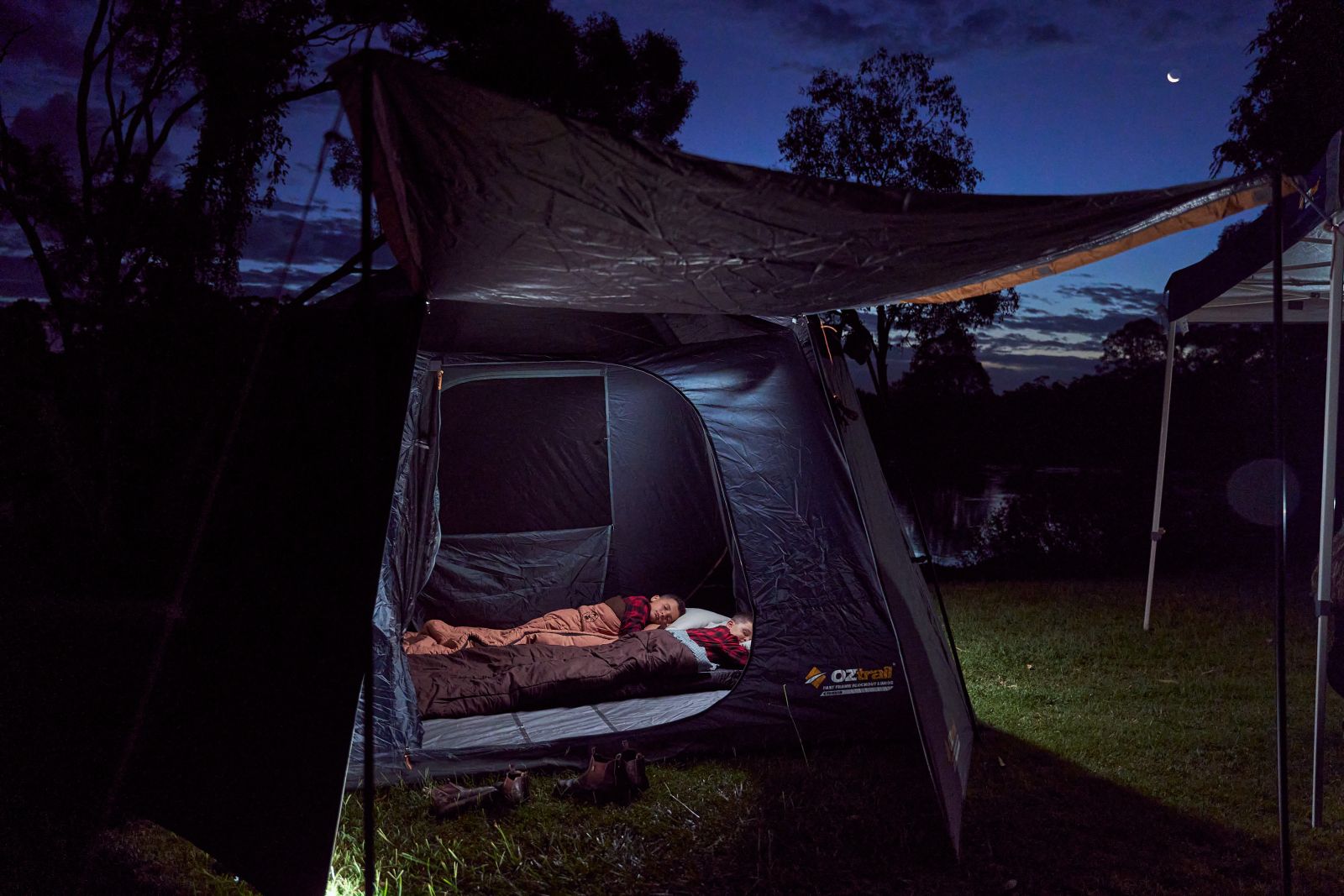
There's a real difference between having enough light to not trip over a guy rope and having enough light to cook a meal, find gear in the back of your canopy, and sit comfortably with a beer after dark.
The shift to 12V LED camp lights has made proper campsite lighting genuinely practical for the first time. Older fuel lanterns were bright but produced significant heat, required cylinder management on longer trips, and posed a real burn risk around kids. Modern 12V LED bars and strip lights draw as little as 0.6 amps per bar, run directly from your aux battery, don't generate meaningful heat, and last much much longer. For anyone already running a dual battery setup, adding camp lights is almost zero cost to your power budget.
What to Look For in Outdoor Camper Lights
1. Lumens: How Much Light Do You Actually Need?
Lumens measure light output. For outdoor camper lights, the numbers that matter by zone are: 50–200 lumens for inside a tent or swag, 200–500 lumens over a cooking area or camp kitchen, and 500–1,600 lumens for a well-lit awning or group area. Aim for 800–1,500 lumens total across your campsite setup for comfortable, task-capable illumination without wasting power.
Don't chase maximum output without thinking about placement. Two 300-lumen bars positioned under your awning will light your cooking area better than a single 1,000-lumen unit mounted at the wrong angle.
2. IP Rating: Dust and Rain Protection
The IP (Ingress Protection) rating tells you how well a light is sealed against dust and water. For campsite use in Australian conditions:
- IP65: Dust-tight and protected against water jets. Adequate for most camping, but not submersion.
- IP67: Dust-tight, protected against water immersion up to 1 metre for 30 minutes. Good for creek crossings and heavy rain.
- IP68: Dust-tight, protected against prolonged submersion. The gold standard for camp lights that will live permanently on a vehicle or awning.
Note that many kits rate the light bars at IP68 but exclude the dimmer switch. That's standard across the category. Keep your dimmer in a dry spot or inside the canopy when not in use.
3. Colour Temperature and Bug Deterrence
This is the feature most buyers overlook until their first warm summer night in the bush. Standard cool white LEDs (5,500K–6,500K) produce a bright, clean light — and act like a bug magnet. Orange and amber LEDs at 610nm attract significantly fewer insects. Testing shows orange mode reduces bugs by up to 90% compared to white.
For this reason, a tri-colour kit with cool white, warm white, and orange modes is the most practical option for general touring. Use cool white for setup and cooking, switch to warm white for eating, then drop to orange for the rest of the evening.
4. Power Draw vs. Your Battery Capacity
LED camp lights are efficient, but it's worth knowing what your setup costs you per hour. A 4-bar Hard Korr kit draws 2.4 amps per hour total on full brightness. If you're running a 100Ah lithium battery, that's over 40 hours of camp light on a single charge — more than enough for a week of nights without any solar top-up. Even a 100Ah AGM battery, which you'd typically only draw down to 50%, leaves you with 20+ hours of run time.
Where power draw adds up is when you're running camp lights alongside a fridge, charging devices, and running a fan. Know your total load before you size your battery system.
5. Mounting Options
How you mount your lights matters as much as the lights themselves. The main options are:
- Magnetic: Quick to reposition. Good for metal awning poles, canopy frames, or toolboxes. Not suitable for non-ferrous surfaces.
- Adhesive (3M tape): Permanent or semi-permanent. Clean look. We recommend using genuine 3M tape rated for outdoor use — it holds through corrugations and heavy rain.
- Sail track: Factory-style mounting that slides into an awning sail track rail. Clean and secure, but requires a compatible awning system.
- Pole clips: Clip directly to awning poles, tent poles, or camp chairs. The most flexible option for setups that change between trips.
Comparing the Best 12V Outdoor Camper Lights
| Product | Output (white) | IP Rating | Colour Modes | Mounting | Power Draw |
|---|---|---|---|---|---|
| Hard Korr 4-Bar Tri-Colour Kit | 2,360 lm | IP68 | Cool white / Warm white / Orange | Pole clips | 2.4A/hr total |
| Hard Korr 3-Strip Awning Kit | 3,300 lm | IP68 | Cool white / Warm white / Orange | 3M adhesive | ~3A/hr |
| Tuff Terrain Dual Colour Strip | Varies by size | IP67 | Cool white / Amber | 3M adhesive / screws | Low draw |
| Hard Korr U-Lite Dual Colour Lantern 4 Pack | 155 lm per lantern | IP66 | White / Orange / Flashing orange | Inbuilt magnet + elastic strap | Inbuilt lithium (rechargeable) |
Hard Korr 4-Bar Tri-Colour LED Camp Light Kit

The workhorse setup for 4WD canopies and awnings.
Key Features:
- 4 x 48cm aluminium light bars with IP68-rated epoxy resin coating
- 2,360 lumens white output, 24m of plug-and-play cabling
- Tri-colour dimmer: cool white, warm white, and orange modes
- IP68 waterproof (excluding dimmers), 50,000-hour LED lifespan
- Includes tri-colour dimmers, pole clips, and cigarette plug lead
Hard Korr invented the LED camp light bar format back in 2008 and this tri-colour kit is the reason they're still the benchmark. Each 48cm bar carries both orange and white LEDs, and the tri-colour dimmer switches between cool white for maximum brightness, warm white for a more relaxed evening atmosphere, and orange for bug reduction. That flexibility in a single kit is what the Lifestyle and generic strip alternatives can't match. At 2.4 amps total per hour on white, it's efficient enough to run off a standard 100Ah auxiliary battery for a week of nights without much concern.
Reviewers in the Unsealed 4x4 field test confirmed the build quality and the orange mode's real-world effectiveness against insects.
Best for: Canopy setups, 4WD tourers who want a proven kit they can run off their existing 12V system without any modifications.
Shop the Hard Korr 4-Bar Tri-Colour Camp Light Kit at Outback Equipment
Hard Korr 3-Strip Tri-Colour LED Awning Light Kit

The most illumination per dollar for permanent awning setups.
Key Features:
- 3 flexible LED strips designed for 180° or 270° awnings
- 3,300 lumens on white — the highest output in this comparison
- Tri-colour dimmer: cool white, warm white, and orange modes
- IP68, genuine 3M double-sided adhesive mounting
- 1.5m lead with cigarette plug, calibrated cables for awning dimensions
Where the bar kit uses rigid aluminium bars clipped to poles, this strip kit is designed to sit flush against the inside of an awning and stay there. The 3M adhesive holds through corrugations — that's not a given with cheaper alternatives that use generic foam tape. At 3,300 lumens on cool white, this is the brightest option in the Hard Korr range and will easily cover the full footprint of a standard 2.5m awning.
The tri-colour dimmer is the standout upgrade over the basic dual-colour kit. The warm white setting sits around 2,700K and makes a genuine difference to the atmosphere at camp — less glare, more comfortable for extended evening use. The orange mode does the job on bugs. One thing to note: the strips are mounted with adhesive, which makes repositioning harder than a pole clip system. If you change awnings or vehicles regularly, the bar kit with pole clips is more practical.
Best for: Caravanners and camper trailer owners who've found a setup they like and want a clean, high-output permanent awning lighting solution.
Shop the Hard Korr 3-Strip Awning Kit at Outback Equipment
Tuff Terrain Dual Colour LED Strip Light

The most flexible 12V strip solution for mixed setups.
Key Features:
- Available in 30cm, 60cm, and 90cm lengths — build the layout you need
- IP67 rated, epoxy-sealed housing
- Dual colour: cool white and amber, independently dimmable
- Multiple mounting options: 3M adhesive, self-drilling screws, or M6 bolts
- Plug-and-play 12V, lithium battery compatible
The Tuff Terrain strips are the most configurable option in this comparison. Because they come in three lengths, you can mix and match to fit a non-standard awning, a canopy with awkward dimensions, or a setup that's split across two zones. Mounting is straightforward — 3M adhesive for a clean look, or self-drilling screws and M6 bolts where you need something more permanent on a rough-track rig.
The IP67 rating is one step below IP68, which matters if you're regularly exposed to creek crossings or heavy sustained rain. For most camping conditions across Queensland, NSW, and SA, IP67 is more than adequate. If you're heading for Cape York in the wet or crossing deep streams in the Kimberley, the IP68-rated Hard Korr options are the safer specification.
Best for: Campers who need a custom-sized solution or want sail-track mounting compatibility with their existing awning system.
Shop Tuff Terrain Strip Lights at Outback Equipment
Hard Korr U-Lite Dual Colour Lantern 4 Pack
The no-mount option for campers who want zero installation and maximum flexibility.
Key Features:
- 4 x lanterns, 155 effective lumens each, inbuilt rechargeable Li-ion battery
- IP66 waterproof, 85g per lantern — packs into an included carry case
- Switchable white and orange light, plus flashing orange emergency mode
- White high: 155 lm / 4 hrs. White low: 5 lm / 90 hrs. Orange high: 50 lm / 10 hrs
- Inbuilt magnet and durable elastic strap — no tools, no cabling
- Backed by Hard Korr's 2-year Australian warranty
If you don't want to mount anything, run any cabling, or commit to a fixed install, these lanterns are the answer. Each one weighs 85g and attaches in seconds via an inbuilt magnet or elastic strap to tent poles, awning rails, wheel wells, toolboxes, caravans, and more. No 12V circuit required. They charge together via an included 4-way USB cable, which means they're just as practical at a hike-in campsite as they are parked next to a 4WD.
The orange mode is the same bug-reducing technology found in Hard Korr's bar kits. Spread four lanterns across your setup and you've covered the cooking area, the table, and two personal zones with no wiring at all. Drop any of them to white low (5 lumens, 90-hour battery life) for use inside a tent or swag without disrupting anyone else at camp.
The honest trade-off: these are not a like-for-like swap for a bar kit. On full white, each lantern produces 155 lumens. Four together reaches 620 lumens total — comfortable for sitting and eating, but well short of the even, task-capable coverage a 2,360-lumen bar kit throws over a full awning. For serious cooking areas or large group setups, these work best as a complement to a main 12V system rather than a standalone replacement for one.
Best for: Weekend campers, hikers, and anyone who wants versatile, battery-free-from-the-grid lighting with zero installation. Also a solid backup or secondary light source to run alongside a fixed bar kit.
Shop the Hard Korr U-Lite Dual Colour Lantern 4 Pack at Outback Equipment
Which Outdoor Camper Light Setup Is Right for You?
You're a 4WD tourer with a canopy or fridge slide setup: The Hard Korr 4-Bar Kit is the right call. It's proven, efficient, and the pole clip mounting works with virtually every canopy gull-wing system. Add an extension bar if you need more coverage.
You're caravanning and want permanent, high-output awning lighting: Go with the Hard Korr 3-Strip Tri-Colour Awning Kit. The 3,300-lumen output covers a full awning footprint, the tri-colour dimmer earns its keep every evening, and the 3M adhesive is designed to stay put for the long haul.
You've got a non-standard awning size or a sail-track system: The Tuff Terrain Dual Colour Strips in mixed lengths give you the configurability to build the exact layout you need. Mix 90cm and 60cm bars to fit irregular spaces without wasted overhang.
You want zero installation and complete flexibility: The Hard Korr U-Lite Lantern 4 Pack is the go-to. No cabling, no 12V circuit, no mounting required. Use the inbuilt magnet or elastic strap to attach them wherever you need light. The orange mode handles bugs just as well as the bar kits, and the 90+ hour low-mode runtime means you won't be recharging every night.
Final Verdict
For most Australian 4WD tourers and caravaners, the Hard Korr tri-colour range is the practical benchmark. The OSRAM LEDs, IP68 rating, 50,000-hour lifespan, and 5-year warranty represent genuine buy-once value. The orange mode alone is worth the price difference over cheaper alternatives — once you've camped under orange light in Queensland in summer, you won't go back.
If no-install portability is your priority, the Hard Korr U-Lite Lantern 4 Pack is the cleaner option — rechargeable, genuinely lightweight at 85g each, and the same orange bug-reduction technology found in the full bar kits. The trade-off is total output: 620 lumens across four lanterns is comfortable for sitting and eating, but won't match a dedicated bar kit over a full awning.
Browse the full range of exterior camper lights at Outback Equipment, including awning lights, strip kits, and exterior fittings for caravans and RVs, with delivery across Australia.
Frequently Asked Questions
How many lumens do I need for outdoor camp lighting?
For a complete campsite setup, aim for 2,000–3,300 lumens total across your awning or outdoor area. Cooking zones benefit most from bright, consistent light — at least 600 lumens directed at your kitchen area. Personal areas like tent interiors or swag spaces are comfortable at 200–400 lumens. A 4-bar LED camp light kit in the 2,400–2,500 lumen range covers most setups without leaving your battery flat.
What is the best IP rating for outdoor camper lights in Australia?
IP68 is the best specification for 4WD touring in Australian conditions. It covers dust-tight sealing and prolonged water submersion — relevant if you're doing creek crossings in the Kimberley or camping through wet season rain. IP67 (dust-tight, short submersion) is adequate for most general camping. IP65 (dust-tight, water jet resistant) is a minimum acceptable rating for any outdoor camp light exposed to the elements.
Does the colour of LED camp lights really affect insects?
Yes. Standard cool white LEDs emit light across the spectrum including UV wavelengths that insects can detect. Orange and amber LEDs at 610nm fall outside the visual range most insects are attracted to. Hard Korr's testing shows orange mode reduces bug presence by up to 90% compared to white. This is a meaningful quality-of-life difference on warm nights near water or in the tropics, and the primary reason tri-colour kits are worth the extra cost over white-only alternatives.
Can I run 12V LED camp lights from my main car battery?
You can, but it's not recommended for extended use. A 4-bar kit drawing 2.4 amps per hour will run for many hours before affecting a healthy 100Ah main battery, but if the engine isn't running you risk dropping voltage low enough to affect start reliability. A dedicated auxiliary (dual battery) setup is the right solution for any serious camp lighting install. If you're not yet running a dual battery system, a quality portable lithium power station gives you a safe middle ground while you build your setup.
What's the difference between flexible LED strips and rigid LED light bars for camping?
Rigid bars use aluminium housings and are designed to be mounted on poles, clips, or magnetic surfaces. They hold their shape, are easy to reposition, and typically produce a consistent beam angle (120°–180°). Flexible strips use a thin, bendable PCB and are designed to be adhesive-mounted to flat surfaces like the underside of an awning rail or canopy ceiling. They sit flatter and look cleaner in a permanent install, but are harder to reposition between setups. Choose rigid bars for versatility and flexible strips for a cleaner long-term installation.

Leave a comment