
180 vs 270 Degree Awning: Which 4WD Shade is Best for Your Rig?
Should You Choose a 180 or 270 Degree Awning for Your 4x4 Setup?
At a Glance: 180 vs 270 Awnings
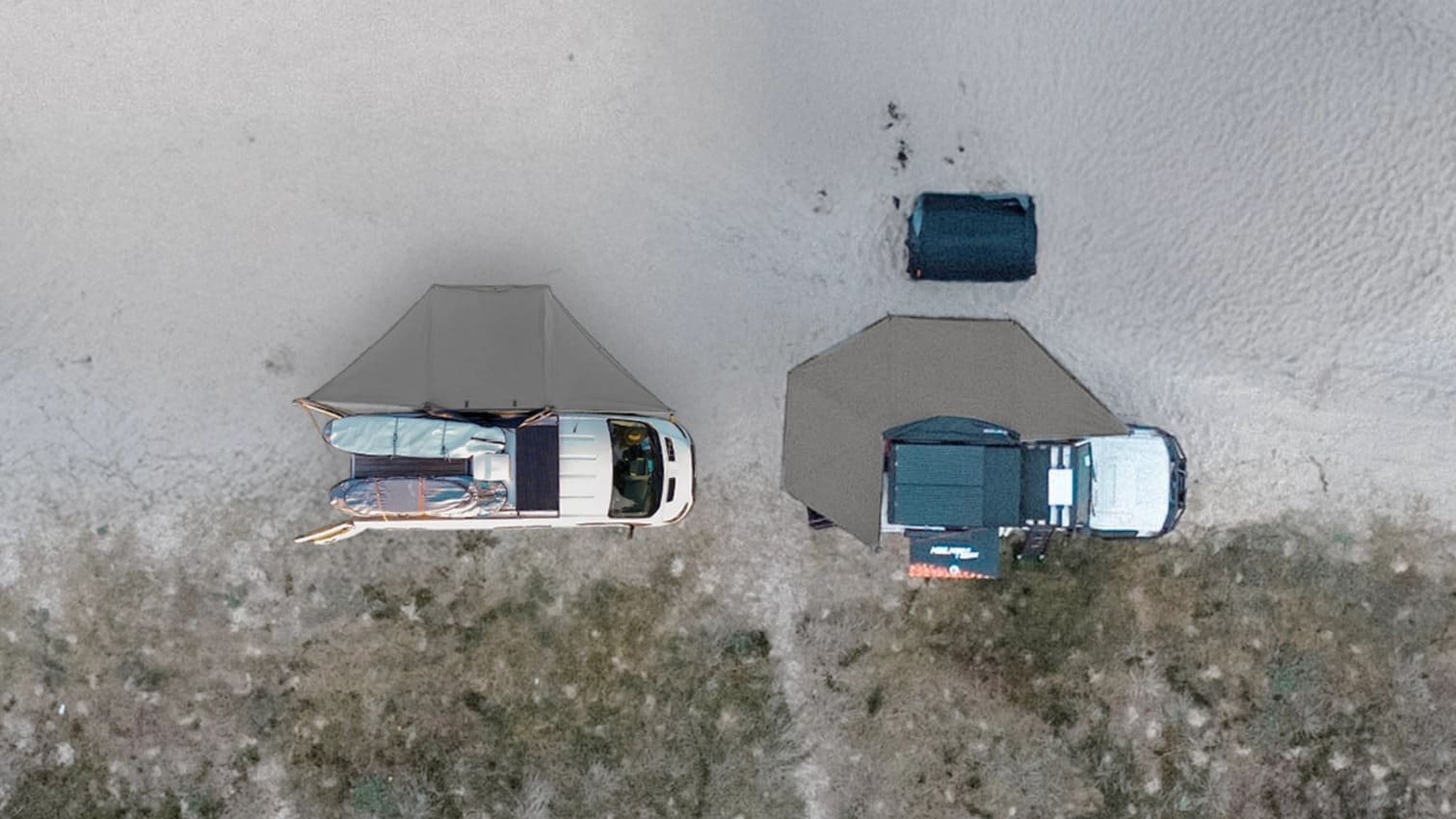
We use the Tuff Terrain models when comparing a 270 and 180 awning.
| Feature | 180° Free Standing Awning | 270° Free Standing Awning |
|---|---|---|
| Best For | Utes, Vans, & Wagons with lift-up tailgates | 4wd Wagons & Rear-Mounted Kitchens |
| Shade Area | Approx. 8.1m² | Approx. 11.14m² |
| Average Weight | 19kg - 21kg | 25kg - 32kg |
| Setup Speed | Faster—straight out to the side | Quick, but requires more tension at the rear |
| Mounting | Fits shorter racks (over cab/canopy) | Needs a long, stable mount for the pivot |
180 vs 270 Degree Awning: Which is the best 4x4 accessory for you?
The 180° Awning
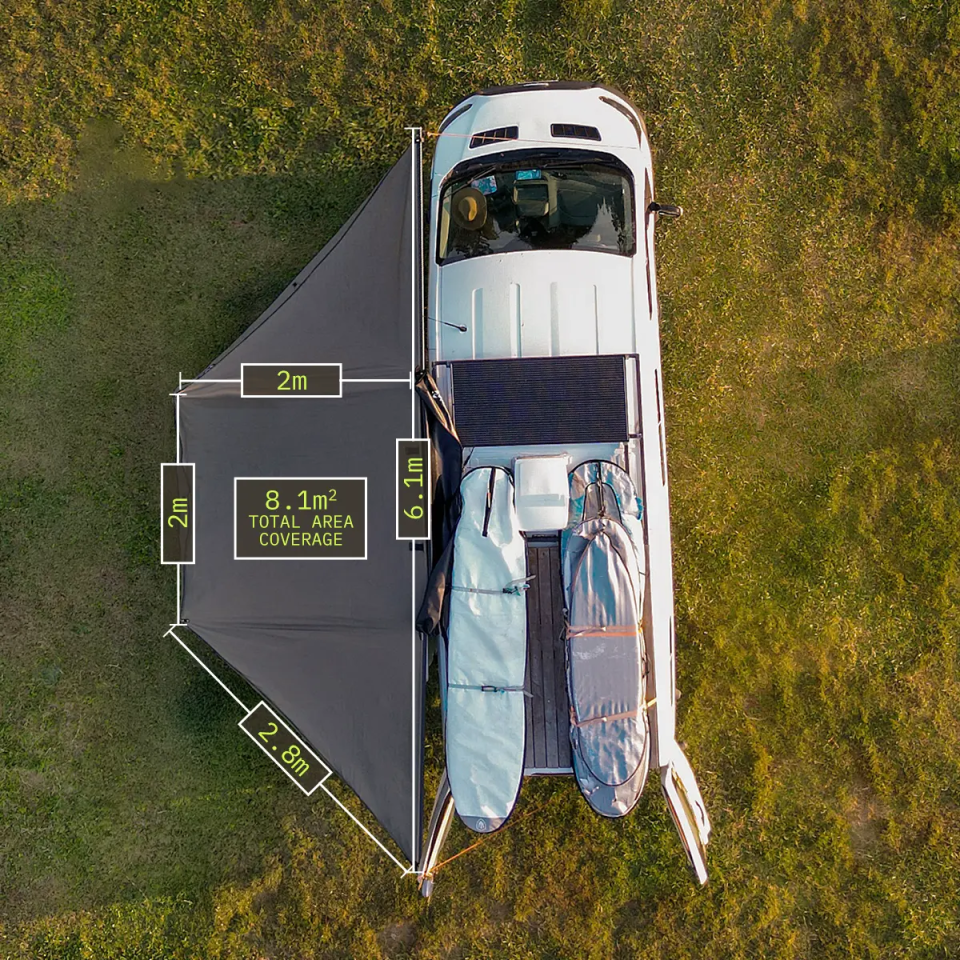
A 180 awning is the go-to for van builds and utes where you primarily live out of the side doors. If you do not spend much time at the back of the rig, this gives you all the shade you need without the extra bulk. It is significantly lighter on your roof rack and takes about half the time to pack away compared to a full wing. It is the ideal choice if you want a sturdy shelter that does not mess with your GVM or make the car feel top-heavy on the tracks.
The 270° Awning
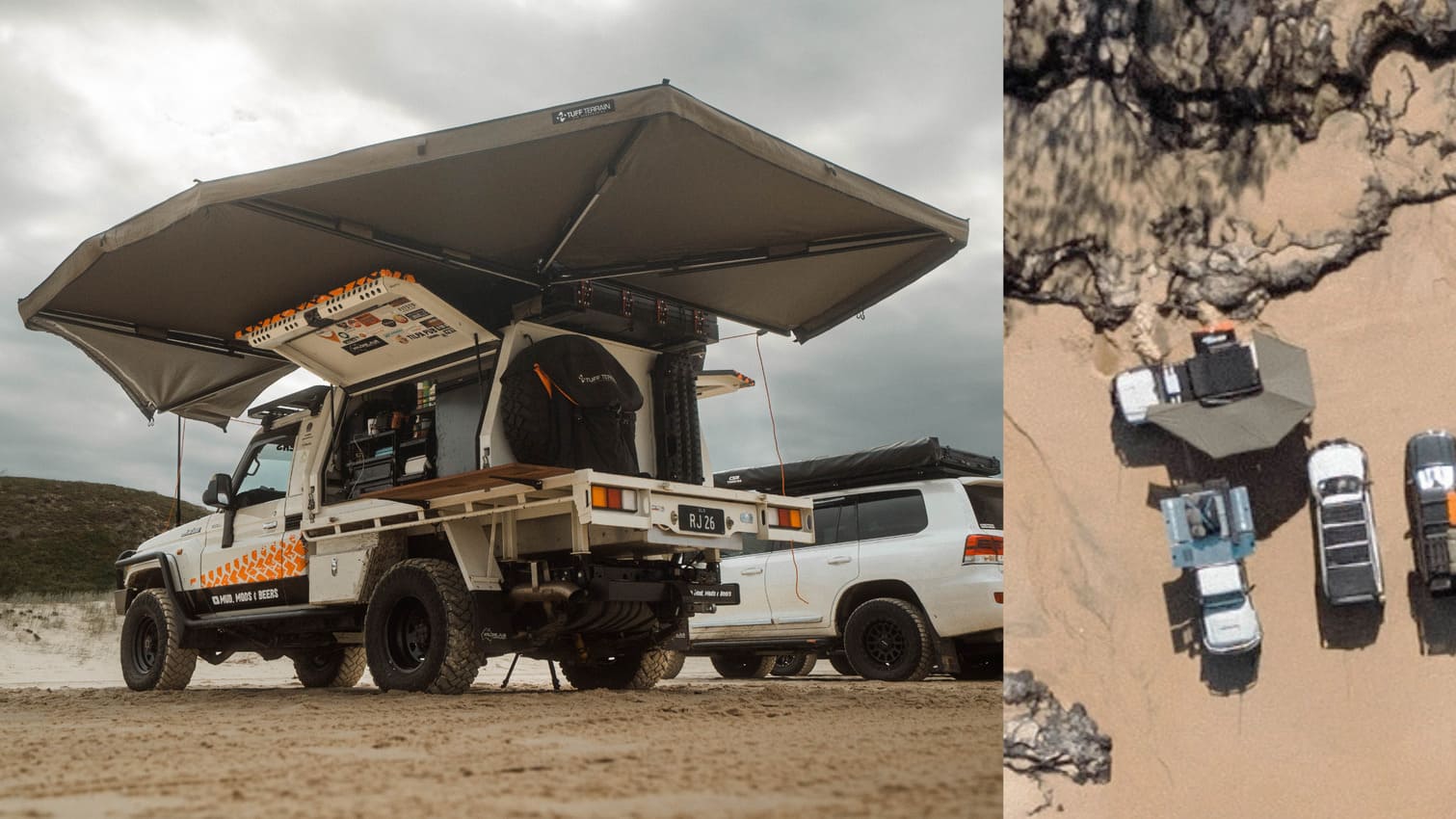
If you have a fridge slide or a kitchen built into the rear, a 270-degree awning is a game-changer for a 4wd setup. There is nothing worse than trying to prep a meal in the rain while water runs down your neck because there is a gap between your car and your shade. This wrap-around accessory creates one big, seamless outdoor space where you can dine and hang out without getting wet. It turns the back of your car into a proper living area, which makes a massive difference on those longer trips with the family.
The tailgate challenge
Before you bolt anything to your rack, you have to look at how your tailgate or upper hatch opens. This is a critical point for Australian wagons because a 270-degree wing can sit right in the path of the door. If the awning is mounted too low, you will be constantly bumping the hatch against the awning arms, which is a quick way to scratch your paint or do a bracket in. A 180° awning avoids this entirely because it stays on the side, leaving the back of the car clear so you can get to your gear without a drama.
Can your roof rack handle the leverage?
Freestanding vs. Poles
A lot of people buy a free standing awning thinking they will never have to touch a pole again. While models like the Bush Company 270 XT Max or Darche are built with serious aluminium extrusion strength, you have to be smart about it. In calm weather, they are a dream, but once the wind starts gusting, these things act like a massive sail. Even a sturdy accessory needs two poles and secure pegs to stop the arms from bending or, worse, ripping the mounting brackets off your roof rack.
The High Winds Risk
The biggest worry with a 270 and 180 awning is the leverage they put on your vehicle. Because there are no poles to take the weight, all that pressure goes straight into the hinge and your roof rails. If you are caught in extreme weather conditions, a sudden gust can bend the frame before you have a chance to unfold a guy rope. Most experienced 4wd campers will tell you that if it's too windy for a gazebo, it's too windy to leave your awning without a bit of stability.
Why 320gsm Canvas Beats Standard Fabric
Thermal Protection
The fabric on your awning is the only thing between you and the relentless sunlight. Cheap, thin materials might give you shade, but they do not stop the heat from soaking through. A heavy 320gsm canvas provides much better UV protection and actually keeps the camp cooler. It makes a massive difference when you are trying to dine or relax in the middle of a hot Australian summer.
Water Ingress and Pooling
If your awning is not set up with enough tension, rain will eventually find a low spot and start to pool. That weight will bend even the strongest aluminium arms over time. Using adjustable poles to create a steep angle is the best way to prevent water from sitting on the fabric. A high-quality canvas that is waterproof and water-repellent will ensure you stay dry inside your shelter without the material sagging under the pressure.
The Pack Away Factor
When it is time to pack away, your awning needs a sturdy home. A 1000gsm PVC pack is the industry standard for a reason; it is tough enough to protect the awning from branches, dust, and heavy rain while you travel. Just remember the golden rule: if you pack it up wet, you have to open it back up within 48 hours to dry it out. If you don't, mould will move in and ruin your expensive accessory before your next trip.
Advanced Setup: Maximising your 270 and 180 setup

To get the most out of your 4x4 shelter, you should look at these specific accessories that solve common outback challenges.
What are the best add-ons for a freestanding awning?
- Zip-on side walls: These panels turn your shade into a fully enclosed tent for extra protection. They are essential for blocking strong winds and preventing rain from blowing into your outdoor space while you dine.
- LED light strips that also have amber lights: Replacing or adding amber lights to your awning arms reduces insect attraction by up to 90% compared to white lights. This makes your camp more comfortable at night because you aren't being swarmed by mozzies while using the fridge.
- Pegs & fasteners: Standard pegs will not hold a free standing awning in soft coastal soil. Using reinforced sand pegs ensures your mounting brackets and frame do not bend if a sudden gust of wind catches the canvas.
- Rope Ratchet Tie Downs: These use a simple auto-lock pulley system that lets you anchor your awning in seconds without faffing about with knots. The push-button release also makes it much faster to pack away when you are in a rush to leave camp.
Why Tuff Terrain Awnings are the great choice for 4x4 touring
When you are weighing up all the types of awnings on the market, the Tuff Terrain range hits that sweet spot between strength and weight. They do not overcomplicate things with heaps of plastic parts that snap. Instead, they focus on a sturdy build that actually handles the vibration of a corrugated track.
The Tuff Terrain 180: The lightweight specialist
The Tuff Terrain 180 is a compact, durable 180° awning that is perfect for anyone trying to keep their vehicle weight down. At just 19.8kg, it is one of the lightest free standing units you can get that still uses a heavy-duty frame. It provides 8.1m² of shade, making it the ideal choice for utes and vans where you want a fast setup without overloading your roof rack.
The Tuff Terrain 270: The wrap-around powerhouse
If you need maximum protection, the Tuff Terrain 270 is a proper wrap-around beast. It gives you a massive 11.14m² of coverage, which is about 37% more shade than the 180 model. It comes with four integrated LED strips that feature both white and amber modes, so you can keep the mozzies away while you dine. It is the versatile choice for families or anyone who spends a lot of time living out of the rear of their rig.
Built for the Bush: Strength where it counts
What makes these awnings work in the unforgiving bush is the innovative aluminium frame and the heavy 320gsm fabric. Often, the other awnings use a thinner 280gsm canvas, but the extra weight in the Tuff Terrain canvas means better UV protection and a shelter that will not flap itself to pieces in high winds. Because they include high-quality mounting brackets and a 13mm ratchet spanner in the box, the easy installation means you can get it onto your rack and get out on the tracks sooner.
