
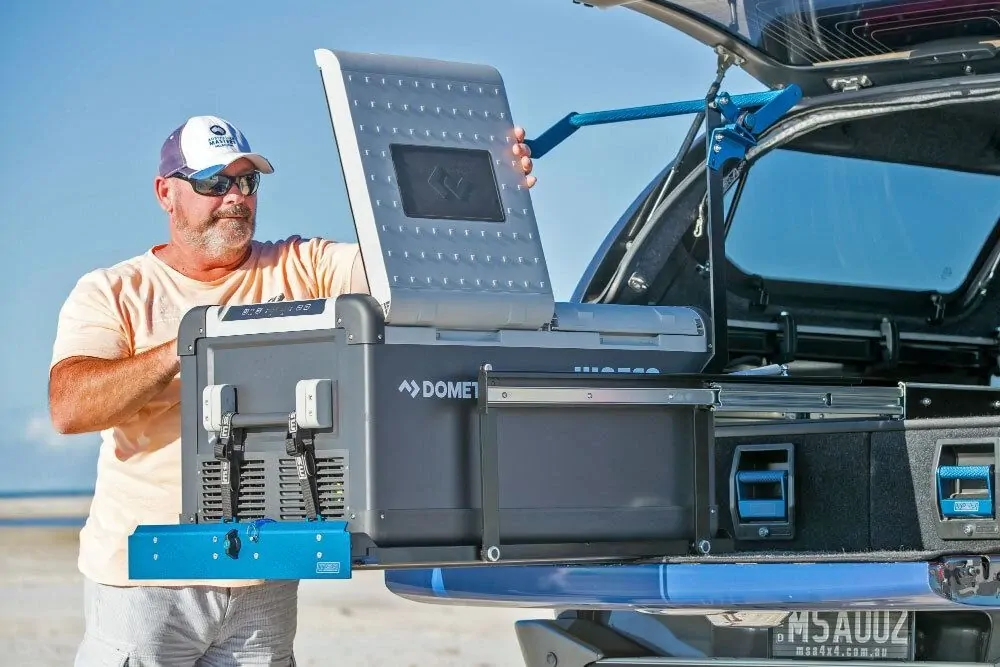
 When camping, having a good fridge, hot coffee and enough power to run both is the difference between a relaxed week off-grid and a melting-esky scramble three hours from the nearest town. The catch is that every appliance you add pulls from the same finite battery, so the gear has to be chosen as a system, not picked one piece at a time.
This guide covers the appliances that matter most at camp: fridges, cooktops (gas and induction), a power station to run them, and fast ways to boil water.
Why Your Appliances Are Only as Good as Your Power Setup
Here is the part most lists skip. A 240V appliance is useless at a bush campsite unless you can generate 240V, and a 12V fridge will flatten your starter battery overnight if it is the only thing you plug it into. Aussie conditions also make this worse. On a 40°C day, a compressor fridge runs far more often than it does in a shed at 22°C, and that extra duty cycle will drain pretty fast.
So before you buy anything that draws power, it’s good to at least get an idea of these two figures: how much each appliance pulls, and how much your power source can store and deliver.
What to Look For
1. Power source: 12V, 240V or gas
Match the appliance to how you actually camp. Compressor fridges and 12V kettles run straight off a battery, which suits free camping. Gas cooktops need no electricity at all, which is why a stove and a fridge make a sensible pairing. A 240V appliance is only worth packing if you have an inverter or power station that can run it.
2. Power draw against your battery
A fridge that averages around 1 amp per hour (depending on the model) is a very different proposition to a 12V kettle that can pull over 30 amps at peak. Both are useful, but they make different demands on your setup. Always check the draw figure before you assume your battery can carry it.
3. Capacity for your trip length and group
A 45L fridge suits a couple on a weekend. A family on a week-long trip wanting separate fridge and freezer zones needs something closer to 75L. Bigger is not always better, since capacity costs you weight, space and power.
4. Build for Australian conditions
Corrugations, dust and heat punish weak gear. Look for tough cabinets, proper compressors and brands with local warranty support. A cheap appliance will cost you more if you’re out bush.
5. Safety features and certification
For gas appliances, a flame safety device that cuts the gas if the flame blows out is worth having, especially in wind. For 12V appliances with high draw, check the fuse and connector requirements before you wire anything in.
Camping Appliances at a Glance
| Appliance | Category | Power source | Standout spec | Weight | Warranty |
|---|---|---|---|---|---|
| Companion 45L Transit Fridge/Freezer | Fridge or freezer | 240V AC + 12V/24V DC | Avg ~1 amp/hr, 45L | 15kg empty | 3 years |
| Dometic CFF 70DZ Portable Fridge and Freezer | Dual-zone fridge/freezer | 240V AC + 12V/24V DC | 70L (40/30 split), 2.9Ah/h at 32°C | 26.4kg | 1 Year |
| Dometic Cadac 2 Cook 3 Pro Deluxe | Gas stove and BBQ | LPG (LCC27) | Two independent burners + grill plates | 6.5kg | 2 YEars |
| Proheat 2 Burner Stove (Low Pressure) | Gas cooktop | LPG (LCC27 or bayonet) | 18,000 total BTU, flame safety device | 6.5kg | 2 Years |
| Companion Rover 1300 Power Station | Portable power station | AC, car, solar (LiFePO4) | 1344Wh, 1200W inverter | 15.2kg | 2 years |
| Hardkorr 12V Quick Boil Kettle | 12V kettle | 12V DC (Anderson) | 800mL, boils a cup in ~3.4 min | 0.7kg | 1 year |
Keeping It Cold: Portable Fridges and Freezers
The fridge is the appliance that earns its keep on every trip. Australian food safety guidance is clear that perishable food needs to sit at 5°C or colder to stay safe, and a proper compressor fridge holds that temperature even when the day does not. Both units below sit in the portable camping fridges range.
Companion 45L Transit Fridge/Freezer
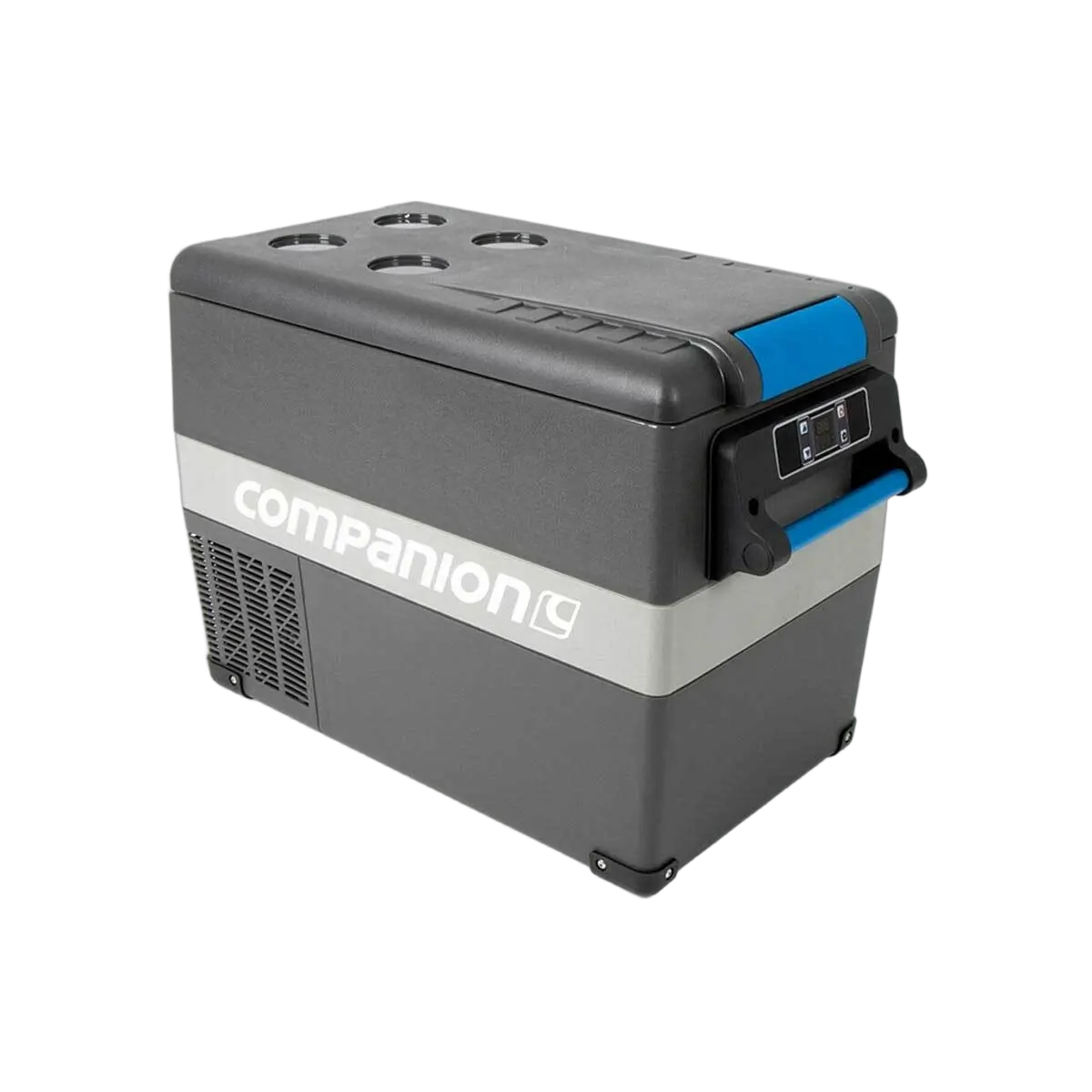
The value all-rounder for weekend trips and smaller setups.
Key Features:
- 45L capacity, usable as either a fridge or a freezer
- Dual speed LG compressor with an average draw of around 1 amp per hour
- Runs on 240V AC and 12V/24V DC, with the AC adaptor included
- Three stage battery monitor to protect your battery from over-discharge
- Tough yet lightweight polypropylene cabinet, 15kg empty
- Digital display, internal LED lighting and a 3 year warranty
The standout here is efficiency. An average draw of roughly 1 amp per hour means a single auxiliary battery will comfortably run this fridge over a weekend without needing to drive or charge daily. At 15kg empty it is light enough to lift in and out of a vehicle on your own, and the three stage battery monitor means you are far less likely to wake up to a flat starter battery. This suits couples and solo travellers doing weekend and short trips who want reliable cooling without a heavy power investment.
Dometic CFF 70DZ Portable Fridge and Freezer
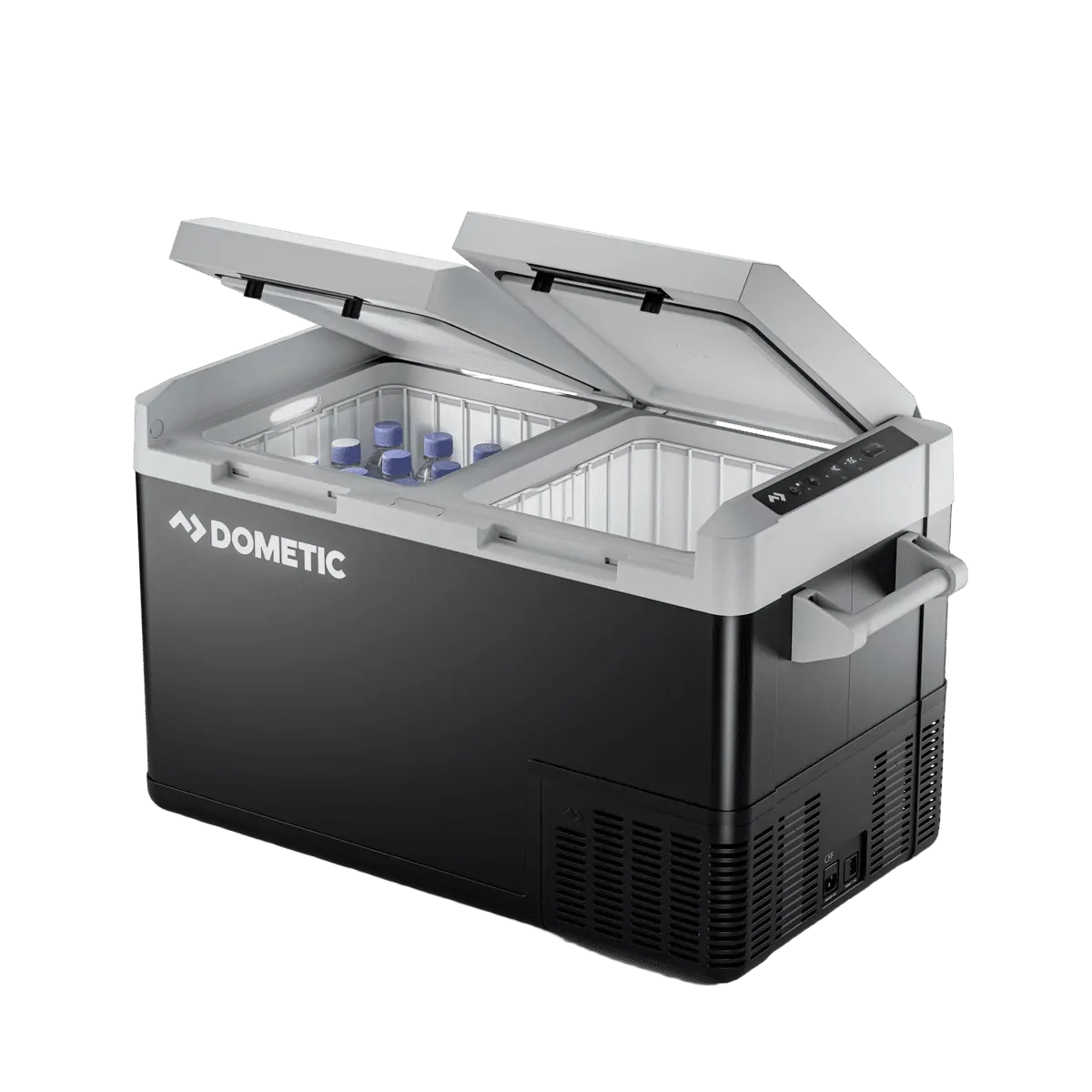
The long-haul choice for families who want a fridge and a freezer in one unit.
Key Features:
- 70L total split into a 40L and a 30L compartment with independent temperature control
- Each zone can be set anywhere between 10°C and -18°C, so you can run fridge and freezer at once
- Full wrap evaporators for fast cooling and freezing, even in high outside temperatures
- Runs on 220-240V AC and 12/24V DC, drawing 2.9Ah per hour at 32°C ambient
- Includes an insulated cover with pockets for storing power leads
- Compact 26.4kg build that pairs with the CFX-SLD75 fridge slide
The dual-zone layout is the reason to buy this one. You get genuinely separate fridge and freezer compartments in a single appliance, so you can keep meat and ice cream frozen while your drinks and fresh food stay chilled, each at its own set temperature. The honest number to plan around is power: at a 32°C ambient it draws about 2.9 amp-hours per hour, which is roughly triple the average of the smaller Companion above. That is the real cost of running a freezer on a hot day, and it is why a fridge like this belongs with a proper battery or power station rather than a single starter battery. At 26.4kg it is lighter than many combi units its size, and the included insulated cover is a genuine efficiency gain. This is the fridge for families and extended tourers heading out for a week or more who need both cold and frozen storage.
Cooking at Camp: Gas Stoves and Cooktops
Camp cooking splits into two camps. Gas needs no electricity, which is why a stove and a fridge make a sensible pairing. Induction is faster, flame-free and easier to clean, but it leans hard on your power setup. The two gas stoves below come from the gas stoves and cookers range, and if you want to bake as well as boil, the 12V ovens are worth a look.
Dometic Cadac 2 Cook 3 Pro Deluxe
.webp)
The versatile tabletop cooker for travellers who want to grill, fry and boil.
Key Features:
- Two independent burners so you can cook two dishes at once
- Comes standard with two pot stands, a coffee stand, and two ceramic coated plates (one flat, one ribbed)
- Piezo ignition on both burners plus a handle for removing hot grill plates
- Gas button protection to prevent accidental opening of the gas supply
- Two side windshields and non-slip rubber feet for stability
- Runs on ULPG with an LCC27 cylinder fitting, IAPMO certified
What sets this apart is the accessory set. The flat and ribbed ceramic plates plus the pot and coffee stands mean one appliance handles a fry-up, a grill and a brew without packing a separate setup for each. The gas button protection is a smart touch if you camp with kids around. It is designed for outdoor use only, so it is not a substitute for an indoor cooktop. This suits campers who want one compact, do-it-all cooker that turns a tabletop into a full camp kitchen.
Proheat 2 Burner Stove (Low Pressure)
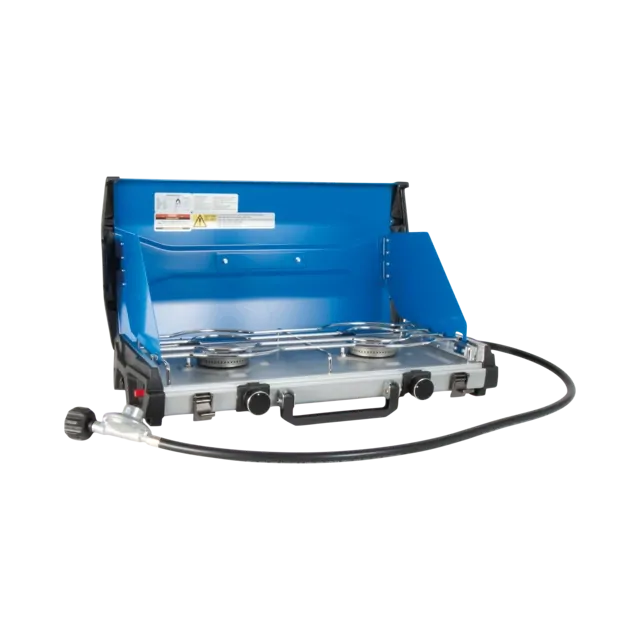
The caravan-ready cooktop for serious touring setups.
Key Features:
- Two burners, each with a flame safety device that cuts the gas if the flame goes out
- Low-pressure operation to make efficient use of every available BTU, 18,000 BTU total
- Bayonet connection ready for a caravan, RV or camper, plus LCC27 cylinder compatibility
- Supplied with a 1200mm LCC27 hose and regulator assembly
- Dual ignition system (piezo and battery) and a heavy-duty trivet
- Wide profile for larger pots, 6.5kg
The flame safety device on each burner is the feature that matters most here. If a gust blows the flame out, the gas cuts off rather than continuing to leak, which is exactly what you want in open conditions. The bayonet connection means it can legally plug into a caravan or camper gas outlet, so it doubles as your van cooktop and your standalone camp stove. The wide profile and 18,000 BTU output handle full meals for a group rather than just boiling water. This is the cooktop for caravan and camper owners who want one stove that works both on the van and off it.
Aussie Traveller RV Induction Cooktop 2300W
The flame-free option for setups with serious power on board.
Key Features:
- Dual cooking zones (180mm and 160mm), each up to 1.8kW, for different sized cookware
- 2300W total, running on 230V and drawing 10A
- Nine heat levels plus a boost mode and a 99-minute timer
- Sensor touch controls, child safety lock and overheat protection
- Micro-crystalline scratch-resistant glass, benchtop or under-bench mount
- Heats cookware directly, so it wastes less heat than gas and wipes clean easily
Induction cooks fast and clean, with no flame, no fumes and no gas bottle to run out mid-meal. That makes it a strong choice for a caravan or a well-built dual battery rig. The catch is power, and it is a big one. At 2300W this cooktop pulls around 10A at 230V, which is far beyond what a 1200W power station like the Companion Rover 1300 can supply, even on its 1800W boost. To run it off-grid you need a large lithium bank paired with a high-output inverter of 2500W or more, or a mains hookup at a powered site. It also only works with magnetic-base cookware, so cast iron, magnetic stainless or carbon steel pots, not aluminium or copper. Run the magnet test on your cookware before you rely on it. This suits caravanners on powered sites and tourers with a substantial battery and inverter setup who want fast, flame-free cooking.
Running It All: Portable Power
Companion Rover 1300 Power Station
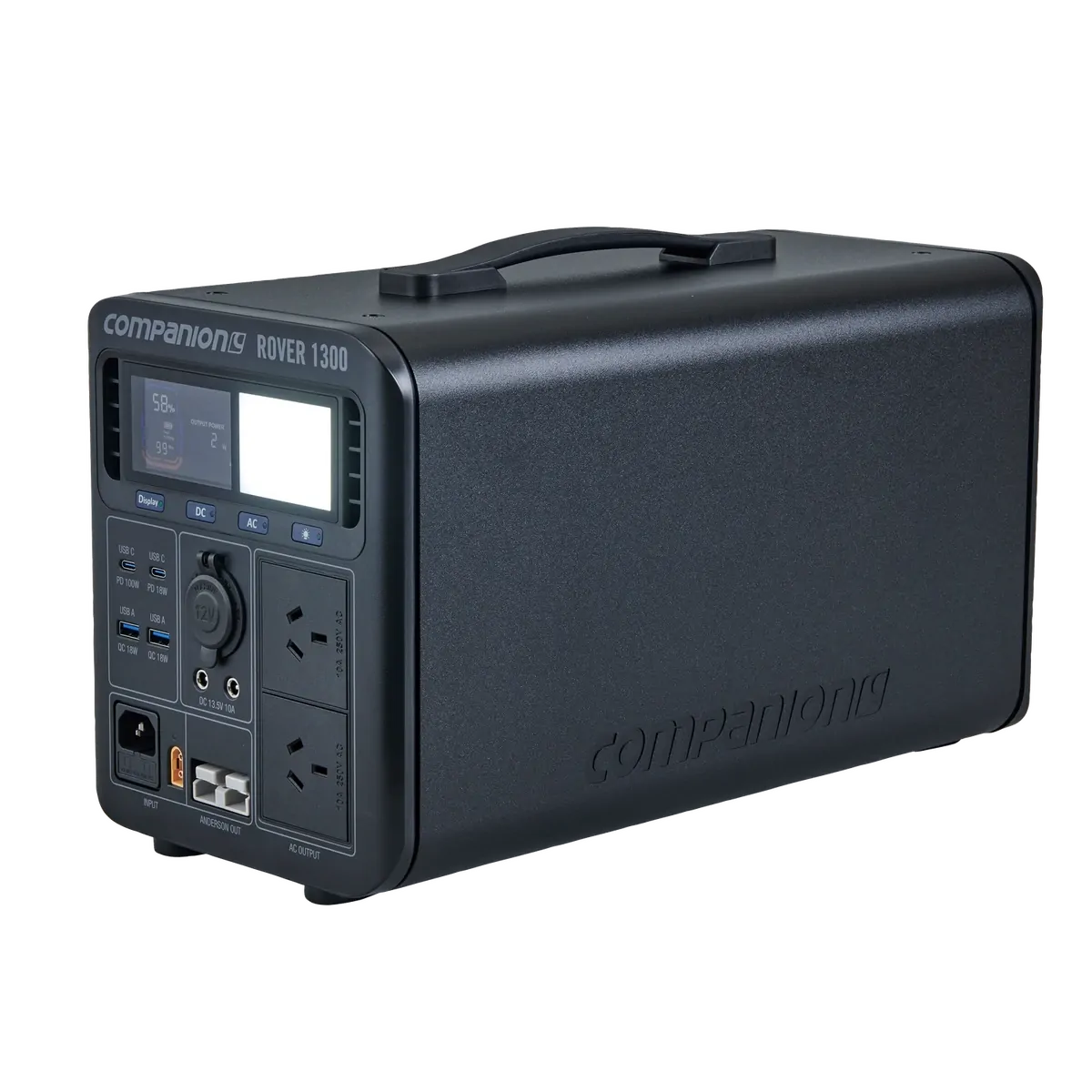
The off-grid power hub that ties your appliances together.
Key Features:
- 1344Wh LiFePO4 battery (equivalent to 105Ah at 12.8V)
- Bi-directional 1200W pure sine wave inverter with a 2400W surge peak and 1800W power boost
- Ten outputs including 2 x 240V AC, a 12V cigarette socket, USB-A, USB-C up to 100W and an Anderson port
- Built-in MPPT controller accepts up to 400W of solar
- Charges to 80% in 90 minutes and 100% in 2.2 hours via 240V AC
- Rated for 2000 lifecycles, 15.2kg, with a 2 year warranty
This is the appliance that makes the others usable off-grid. With 1344Wh of LiFePO4 capacity it can run a compressor fridge for an extended stretch, and the dual 240V outlets let you power AC appliances that would otherwise stay at home. The 400W solar input is the key to going truly off-grid, since on a clear day you can replace much of what you draw overnight. The pure sine wave inverter matters for sensitive gear like CPAP machines and laptops, which can misbehave on cheaper modified sine wave units. At 15.2kg it is a two-handed lift, but it stays compact enough to live in a wagon. This suits free campers and extended tourers who want one unit to keep the fridge cold, the devices charged and a couple of 240V appliances running. If you would rather build your power around a dual battery system, browse the batteries and accessories range.
The Morning Brew: Fast Ways to Boil Water
Hardkorr 12V Quick Boil Kettle
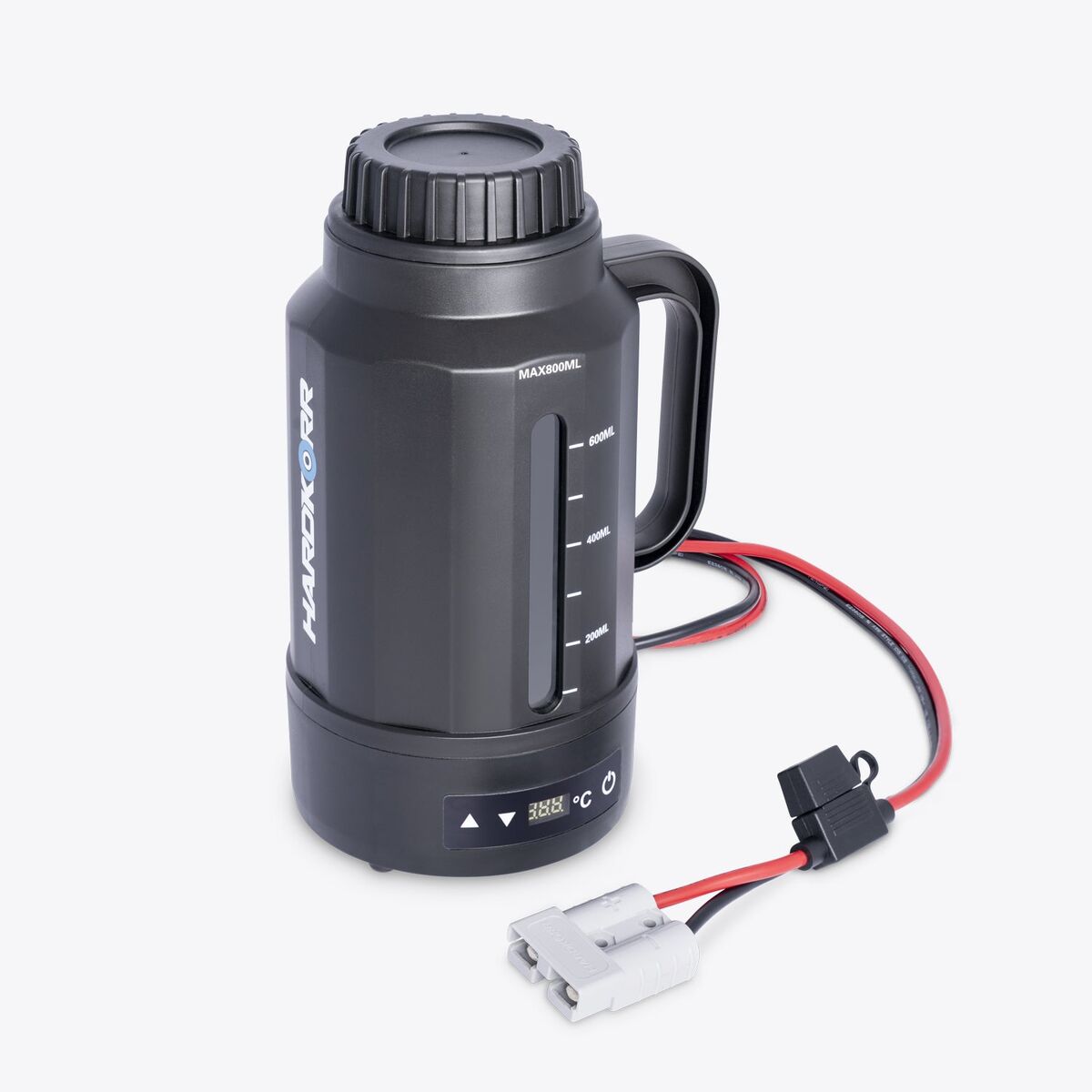
The gas-free way to get hot water at camp.
Key Features:
- 800mL capacity, boils a single cup (200mL) in about 3.4 minutes
- Runs on 12V DC through a 50A Anderson-style connector, no gas or open flame
- Boil dry protection and automatic temperature shut-off
- Automatic reboil function and a screw-top lid in a thermos-style body
- Polypropylene and stainless steel construction, just 0.7kg
- Backed by a 1 year warranty
The appeal is simplicity. Plug it into your 12V system and you have hot water without lighting a burner, which is handy in fire ban conditions or when you just want a quick coffee without setting up the stove. One thing to plan for: it draws hard, up to 31.5A at peak, and pulls about 5.79Ah for a full 800mL boil. That means it must run on a 40A fuse or larger, and the manufacturer is explicit that it should not be used through a cigarette-to-Anderson adaptor because of the high amp draw. Wire it correctly and it is a genuinely useful appliance. This suits tourers with a proper 12V setup who want fast hot water without burning gas. Prefer to boil on the stove? The stovetop and whistling camping kettles are a simpler alternative.
Jetboil Flash 1.0L
The ultralight gas alternative that boils in about two minutes.
Key Features:
- 1.0L FluxRing cooking cup with an insulating cozy to keep water hot
- Boils 0.5L in around 120 seconds, with a rated output of 5300 BTU/h (1.5kW)
- Turn-and-click rotary ignition and a thermochromatic heat indicator that shows when it is ready
- Runs on JetPower gas canisters, boiling roughly 10L per 100g canister
- Everything packs into the cooking cup, and the base cover doubles as a measuring cup
- Light 371g system built for 1 to 2 people
Where the 12V kettle ties into your vehicle, the Jetboil goes anywhere. It draws nothing from your battery, weighs 371g and packs into its own cup, which makes it the better pick if you walk in to a campsite, travel light, or want a backup that works when the batteries are flat. The trade-offs are real: it runs on gas canisters you have to carry and replace, it is sized for one or two people rather than a group, and it is a boil system, not a cooktop for actual meals. On the flip side, a single 100g canister boils around 10 litres, so a weekend of coffees and dehydrated meals barely dents it. This suits hikers, solo travellers and anyone who wants fast boiled water without relying on their 12V system.
Which Camping Appliances Are Right for You?
Weekend camper, smaller setup: The Companion 45L Transit Fridge/Freezer and the Dometic Cadac 2 Cook 3 Pro Deluxe cover cold storage and cooking with minimal weight and power demand.
Family or extended tourer: Step up to the Dometic CFF 70DZ for separate fridge and freezer zones, pair it with the Proheat 2 Burner Stove for proper group meals, and run the lot off the Companion Rover 1300.
Caravanner on powered sites: The Aussie Traveller RV Induction Cooktop gives you fast, flame-free cooking when you have mains power or a large inverter setup, alongside the Dometic CFF 70DZ for storage.
Free camper going fully off-grid: The Companion Rover 1300 with its 400W solar input is the centrepiece. Add an efficient fridge and the Hardkorr 12V Quick Boil Kettle so you are not relying on gas for hot water.
Hiker or minimalist: Skip the heavy gear and pack the Jetboil Flash 1.0L. It boils fast, needs no battery, and packs down small enough to carry in.
The Bottom Line
Camping appliances work best when they are matched to each other and to how you travel. Size your fridge to your trip, pick a cooktop that suits your style of cooking, and build a power setup that can carry the load with headroom to spare. Get those three right and the rest of your kit just slots in around them.
Browse the full range of power stations, portable fridges and camp kitchen and cooking gear at Outback Equipment, with Australia-wide delivery.
Frequently Asked Questions
How much power does a camping fridge use?
It varies by model and conditions. An efficient unit like the Companion 45L Transit averages around 1 amp per hour, while a larger dual-zone fridge such as the Dometic CFF 70DZ draws about 2.9 amp-hours per hour when it is working hard at 32°C ambient. On a hot Australian day a fridge cycles more often, so expect higher draw than the average figure suggests and size your battery accordingly.
Can I run 240V appliances while camping?
Yes, if you have a power station or inverter that can supply 240V. The Companion Rover 1300 has two 240V AC outputs and a 1200W pure sine wave inverter, so it can run AC appliances that would otherwise stay at home. Pure sine wave output also matters for sensitive devices like CPAP machines and laptops.
Do I need a gas stove if I have a power station?
A gas stove is still the most power-efficient way to cook at camp because it puts no load on your battery. Pairing a gas cooktop with a power station means your stored power goes to your fridge, lights and devices instead of cooking. The two complement each other rather than competing.
Can I run an induction cooktop while camping?
Only with a serious power setup. A 2300W induction cooktop draws around 10A at 230V, which is more than a 1200W power station like the Companion Rover 1300 can supply. To run induction off-grid you need a large lithium battery bank with a high-output inverter of 2500W or more, or a mains hookup at a powered site. On a powered caravan site it is a fast, clean way to cook, but it is not practical on a small battery.
Is a 12V kettle better than a gas kettle?
It depends on your setup. A 12V kettle like the Hardkorr Quick Boil needs no flame, which is useful during fire bans, but it draws hard (up to 31.5A) and needs a 40A fuse or larger and a direct Anderson connection. A gas kettle uses no battery power but needs gas and a stove. If you have a solid 12V system, the convenience of the 12V kettle is hard to beat.
What size fridge do I need for camping?
For a couple on weekends, a 45L fridge is usually plenty. Families or anyone heading out for a week or more who wants both fridge and freezer storage should look at around 70L, such as a dual-zone unit with separate compartments. Remember that larger capacity means more weight and higher power draw, so match the size to your actual trips.
Will a camping fridge keep food safe in the heat?
A quality compressor fridge will. Australian food safety guidance recommends keeping perishable food at 5°C or colder, and compressor fridges hold a set temperature even when the ambient heat climbs. Thermoelectric coolers only cool a fixed amount below ambient, so they struggle to stay food-safe on a hot day, which is why a compressor model is the safer choice for multi-day trips.
