You have pulled into a packed caravan park after a long drive. The awning is out, the chairs are set up, and you are ready to relax. Then you notice the neighbours are close enough to comment on your dinner. A caravan privacy screen fixes that problem in about two minutes flat, and it does a lot more besides.
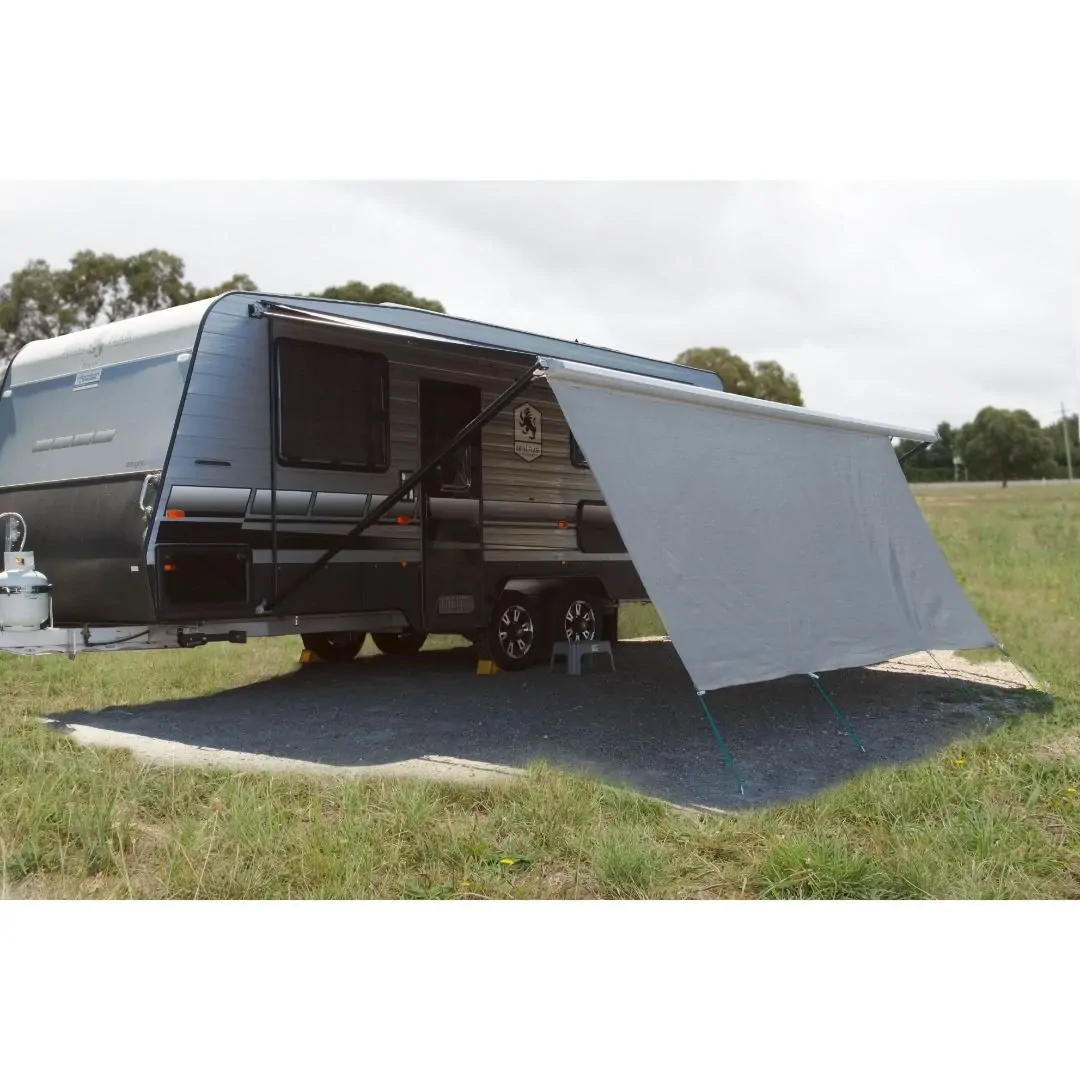
Privacy screens block wind, cut UV exposure, reduce dust at your campsite, and turn the space under your awning into something that actually feels like an outdoor room. They are one of the most practical accessories you can add to a caravan, and one of the most affordable. But there are real differences between screen types, fabrics, sizes, and attachment systems. Buy the wrong one and you will be fighting with it every time you set up.
This guide walks you through the different types of caravan privacy screens, what to look for before you buy, how to measure correctly, and which screens suit different setups.
What Does a Caravan Privacy Screen Actually Do?
At its simplest, a privacy screen is a large panel of shade fabric that attaches to your awning and hangs down to create a wall. It is not an annexe. It does not fully enclose the space. Instead, it blocks the view from one direction while still allowing airflow through the mesh material.
That airflow is the key difference between a privacy screen and a solid annexe wall. On a hot day in Queensland or along the Murray, a solid wall traps heat. A privacy screen blocks the sun (most offer 86% to 90%+ shade factor) while letting the breeze move through. You get cooler air under your awning, less glare, and fewer flies drifting in from the windward side.
They also do a solid job of reducing dust at roadside camps and restricting light rain from blowing in sideways. They will not keep out a serious storm, but for everyday conditions across most of Australia, they make your outdoor living space far more usable.
Types of Caravan Privacy Screens
Not all screens do the same job. There are three main types, and each one covers a different side of your awning setup.
Long Side Screens
Long side screens run along the full length of your awning, parallel to the caravan. They are the most common type. A long side screen slides into the sail track on your awning's roller bar and pegs down at the bottom. This creates a full wall along the front edge of your awning, blocking the view from the road, the neighbouring site, or wherever the sun happens to be hitting hardest.
Long side screens are sized to match your awning length, measured in feet. A 16-foot awning takes a 16-foot screen. The fabric itself will be slightly shorter than that full measurement (usually around 300mm shorter) to allow for the roller mechanism and tie-down space at each end.
End Screens
End screens attach to the awning arms at either end of your setup. They are smaller panels, typically attaching with Velcro straps wrapped around the awning arm, plus guy ropes and pegs at the base. End screens are useful when the sun is low in the morning or afternoon and hitting you from the side. They are also handy for blocking a direct line of sight to the next campsite.
Most end screens are not side-specific. You can flip them to suit either end of your awning, which means one screen can move to wherever you need it on any given day.
Full Offsider Shades (Camper Sunscreens)
Full offsider shades are designed specifically for camper trailers. They attach to the offside of the camper (the kitchen side on most models) using a sail track that runs along the camper's body. Unlike a standard long side screen, these do not need a roll-out awning to work. They slide directly into the camper's sail track and peg to the ground, providing shade and privacy over the cooking and prep area.
If you have a camper trailer rather than a full caravan, this is the screen type to look at. Most popular camper brands from 2012 onwards come with a sail track pre-installed. Older models may need one fitted before a sunscreen will attach.
What to Look for Before You Buy
Five things separate a good screen from a frustrating one. Check all five before you hand over your money.
1. Spline Size and Awning Compatibility
The spline is the rope or cord sewn into the top edge of the screen. It slides into the sail track (also called a rope track or mounting channel) on your awning roller. The catch is that not all sail tracks are the same size.
Roll-out awnings from Dometic and Carefree typically use a 6mm or 7mm sail track. Box awnings from Fiamma and Thule often use a 4mm or 5mm track. If you buy a screen with a 7mm spline and your awning has a 4mm track, it will not fit.
Many screens now come with a dual spline system. The Aussie Traveller Sunblocker range, for example, features a dual spline that fits both 4mm and 6mm sail tracks. The Camec privacy screens use a double rope track with 5mm and 7mm options, covering both box and roll-out styles. Always check the spline size against your awning type before buying.
2. UV Protection and Shade Factor
Two numbers matter here: UVR Block and Shade Factor. UVR Block tells you how much ultraviolet radiation the fabric stops. Shade Factor tells you how much visible light it reduces.
In Australia, these ratings should ideally be tested by ARPANSA, the government agency responsible for regulating sun protection products. Look for specific numbers rather than vague claims. The Coast to Coast range, for instance, lists a UVR Block of 90.4% and a Shade Factor of 86.6. CGear's patented mesh material offers 90%+ UV protection. Both are strong performers for Australian conditions.
If a screen does not publish any UV or shade rating at all, treat that as a red flag. The Australian sun is not something you want to gamble on with unrated fabric.
3. Fabric Weight (GSM) and Material
GSM stands for grams per square metre. Higher GSM generally means a thicker, more durable fabric with better shade performance. Most quality screens sit between 190 and 230 GSM. The Camec privacy screen uses a 230 GSM monofilament, which is at the heavier end and will handle wind and weather well.
Material type matters too. Standard shade mesh (usually HDPE, high-density polyethylene) is the most common. It is lightweight, breathable, and resists mildew. The Aussie Traveller Sunblocker range uses Textilene fabric, which is an outdoor furniture grade coated polyester fibre. It is heavier and more rigid than standard shade cloth, which makes it exceptionally durable but also a bit bulkier to pack. CGear uses a patented material that doubles as both a shade sail and windbreak while still allowing airflow and letting you see out from the inside.
Think about how you travel. If you move camp every few days, a lighter screen is easier to handle. If you set up for weeks at a time, the heavier fabric will hold up better over the long haul.
4. Reinforcement and Tie-Down Points
Wind is the enemy of any screen. The difference between a screen that stays put and one that flaps itself to shreds comes down to how it is built at the edges and corners.
Look for hemmed edges all round, which prevent fraying. Look for reinforced corners and D-rings or eyelets along the bottom edge for pegging. The Coast to Coast camper sunscreens feature reinforcing triangles with D-rings specifically so you can secure the screen to your awning legs. CGear's screens include stainless steel D-ring tie points on both the sides and base.
Check what comes in the box, too. Some screens include guy ropes and heavy-duty pegs. Others (like the Aussie Traveller Sunblocker) do not include ropes and pegs, so you will need to buy those separately.
5. Size and Fit
Getting the size right is the single most common mistake people make when buying a privacy screen. Get this wrong and the screen either will not reach the full width of your awning or it will bunch up and flap in the wind.
How to Measure Your Awning for a Privacy Screen
This is where most people trip up, so it is worth getting into the detail.
For a long side screen on a roll-out awning, you need to measure from the centre of one support arm to the centre of the other support arm. Do not measure the fabric width on the roller. Do not measure the full length of the roller bar. Measure between the arms. That measurement, expressed in feet, is your awning size.
For example, if the distance between arm centres is 4.88 metres, that is a 16-foot awning. You would buy a 16-foot privacy screen. The actual screen fabric will be slightly shorter (roughly 300mm) to account for the roller ends and to leave space for tie-down attachments.
For end screens, measure from the side of the caravan wall out to the front awning leg. You also need the drop height from the awning edge down to the ground.
For camper sunscreens, match the screen dimensions to the width of the offside area you want to cover. The Coast to Coast camper sunscreen measures 2780mm wide by 2050mm high, which suits most popular camper brands.
One important tip: always measure your actual awning. Do not rely on your caravan's listed awning size or what the dealer told you. Awning sizes vary based on door placement, window positions, and tunnel boot locations. Two caravans of the same length can have different awning sizes. Extend your awning fully, measure between the arm centres, and write that number down somewhere you will not lose it.
Screen Picks for Different Setups
Here are four screens from the Outback Equipment range that cover the main use cases.
Camec Privacy Screen 4.3 x 1.8m: The All-Rounder
The Camec Privacy Screen is a strong choice for anyone with a roll-out or box awning. The double rope track with 5mm and 7mm spline means it will fit Fiamma, Carefree, and Dometic awnings without any modification. The 230 GSM monofilament fabric is on the heavier side, which helps it hang well in a breeze. Lock-stitched tape around the full edge adds durability where cheaper screens tend to fail first.
It comes in a lightweight carry bag with tie-down ropes and a set of five pegs. Available in black. The 4.3m width suits a 15-foot awning.
This screen suits travellers who want a reliable, set-and-forget long side wall that works across different awning brands.
CGear Privacy Screen 2.0m x 4.88m (16'): For Dometic Awning Owners
The CGear Privacy Screen is purpose-built for Dometic awnings. If you have a Dometic roll-out, this screen is designed to fit it precisely, with roped track edging that feeds directly into the Dometic awning roller.
CGear's patented material is what sets this screen apart. It blocks most rain while still allowing airflow, provides 90%+ UV protection, and lets you see out clearly from the inside while blocking the view from outside. That one-way visibility is a genuine advantage in busy caravan parks. The fully bound edges and stainless steel D-ring tie points on the sides and base keep it secure in wind.
The 2.0m drop height is taller than many standard screens (which typically sit at 1.8m), giving you better coverage and fewer gaps at the bottom.
This screen suits Dometic awning owners who want a premium screen with superior airflow, rain resistance, and one-way privacy.
Aussie Traveller Sunblocker Long Side Wall 19': The Heavy-Duty Option
The Aussie Traveller Sunblocker takes a different approach to materials. Instead of standard shade mesh, it uses Textilene fabric, an outdoor furniture grade coated polyester fibre. This is the same material used on high-end outdoor furniture, and it is built to take serious punishment over years of use.
It provides 64% light reduction with UV protection. That is lower than the 86%+ shade factor you get from denser mesh screens, but the trade-off is significantly better airflow and ventilation underneath. In hot, humid conditions (think far north Queensland or the Top End), that extra airflow can make the difference between a comfortable campsite and a sauna.
The dual spline system fits both 4mm and 6mm sail tracks, covering most roll-out awning brands. Selected sizes also suit cassette awnings. The wall is available in sizes from 2.75m to 5.80m, making it one of the most versatile ranges for large awning setups. The neutral cool grey colour blends with most awning and caravan colour schemes.
Note that ropes and pegs are not included. Budget for those separately.
This screen suits full-time travellers and those with larger rigs who prioritise durability and airflow over maximum shade density.
Coast to Coast Camper Privacy Sunscreen (W2780mm x H2050mm): For Camper Trailers
The Coast to Coast Camper Sunscreen is designed specifically for the offside of camper trailers. It slides into the sail track on your camper's body (no awning required) and provides shade and privacy over the kitchen area.
The UVR Block rating of 90.4% and Shade Factor of 86.6 are strong numbers backed by testing. The improved spline design resists kinking over time, which is a common complaint with older screens that get rolled and unrolled repeatedly. Reinforcing triangles with D-rings let you secure the screen to awning legs for extra stability. It comes with guy ropes and heavy-duty 8mm steel pegs, and is backed by a 3-year warranty.
At 2050mm high, it is tall enough to stand under without needing additional poles.
This screen is purpose-built for camper trailer owners. If your camper has a sail track on the offside (standard on Jayco campers from 2012 onwards, and most other popular brands), this is the screen to go with.
Quick Comparison
| Feature | Camec 4.3 x 1.8m | CGear 2.0m x 4.88m | Aussie Traveller 19' | Coast to Coast Camper |
|---|---|---|---|---|
| Screen Type | Long Side | Long Side | Long Side | Camper Offsider |
| Dimensions | 4.3m x 1.8m | 4.88m x 2.0m | 5.5m x 1.95m | 2.78m x 2.05m |
| UV/Shade | Not listed | 90%+ UV protection | UV protection, 64% light reduction | 90.4% UVR Block, 86.6 Shade Factor |
| Fabric | 230 GSM monofilament | CGear patented mesh | Textilene coated polyester | Shade mesh with improved spline |
| Spline/Track | 5mm + 7mm dual | Roped track (Dometic specific) | 4mm + 6mm dual | Camper sail track |
| Awning Compatibility | Fiamma, Carefree, Dometic | Dometic | Most roll-out + select cassette | Most camper trailers |
| Ropes/Pegs Included | Yes (set of 5) | Not listed | No | Yes (8mm steel pegs) |
| Carry Bag | Yes | Not listed | Yes | Not listed |
Privacy Screen vs Annexe: Which Do You Need?
This question comes up a lot, and the answer depends on how you camp.
A privacy screen is lighter, faster to set up, cheaper, and keeps airflow moving through your campsite. It is ideal for short stays, warm climates, and situations where you want shade and privacy without feeling boxed in. Most screens can be set up by one person in under two minutes.
An annexe fully encloses the space under your awning. It keeps out rain, wind, cold, and insects. It also traps heat, takes longer to set up, and costs significantly more. If you camp in cold or wet conditions regularly, or you need a fully enclosed room for sleeping or gear storage, an annexe is the better choice.
Many experienced travellers carry both. The privacy screen goes up at every stop. The annexe comes out only when conditions demand it.
Care and Maintenance
Privacy screens are low-maintenance by design. After use, brush off excess dirt or sand, give the screen a shake, and fold it away. Between trips, hose the screen down and let it air dry completely before storing. Never pack a screen away wet. Mould and mildew will take hold fast in a closed bag, especially in humid climates.
Check the stitching at the reinforced tabs and D-rings periodically. These are the stress points that take the most load in wind. If stitching starts to pull, get it repaired before it becomes a tear.
Store your screen loosely folded in its carry bag, out of direct sunlight when not in use. UV breaks down all fabrics over time, even UV-resistant ones.
Frequently Asked Questions
What size privacy screen do I need for my caravan awning?
Measure from the centre of one awning support arm to the centre of the other. That measurement in feet is your awning size. Buy the screen that matches that size. The screen fabric will be slightly shorter (around 300mm) than the full awning measurement, which is normal and by design.
Will any privacy screen fit my awning?
Not necessarily. The spline size on the screen must match the sail track on your awning. Roll-out awnings typically use 6mm or 7mm tracks. Box awnings (Fiamma, Thule) often use 4mm or 5mm tracks. Screens with dual spline systems (like Aussie Traveller's 4mm/6mm or Camec's 5mm/7mm) give you the best chance of fitting multiple awning brands.
Can I leave my privacy screen up overnight or in wind?
In calm conditions, yes. Most screens are fine to leave up as long as the awning itself is secured. If strong winds are forecast, take the screen down. The screen will act as a sail and put strain on your awning arms, which can cause damage. It takes less than a minute to pull a screen down, and it is not worth risking your awning.
What is the difference between a privacy screen and a sunscreen?
In most cases, nothing. Different manufacturers use different names for the same product. "Privacy screen," "sunscreen," "shade wall," and "sun blocker" all describe a shade mesh panel that attaches to your awning or camper. The key specs to compare are UV rating, shade factor, fabric weight, and spline size, regardless of what the product is called.
Do I need a privacy screen for a camper trailer?
If your camper has an exposed kitchen area on the offside (which most do), a camper-specific sunscreen like the Coast to Coast model is well worth having. It provides shade over the cooking and prep area, blocks wind from blowing out your stove, and gives you privacy from neighbouring campsites. It slides into the sail track on the camper body, so no separate awning is needed.
How do I clean my privacy screen?
Brush off loose dirt and sand, then hose down with fresh water. Let it air dry fully before packing away. Do not use harsh detergents or high-pressure washers, as these can damage the mesh weave and strip UV-resistant coatings. If mould appears, a mild solution of water and white vinegar will usually remove it.
Ready to Set Up?
A good privacy screen makes every campsite better. Less wind, less glare, less dust, and a genuine sense of your own space. Browse the full range of caravan privacy screens at Outback Equipment, including long side screens, end screens, and camper sunscreens. If you are not sure which size or type suits your rig, get in touch with the team. We will help you get it right the first time.
